A field report from Saqqez; from the increase in the price of water, electricity, and gas and shortage of cash to banking disruption, general high cost of living, and halting of a part of chicken production
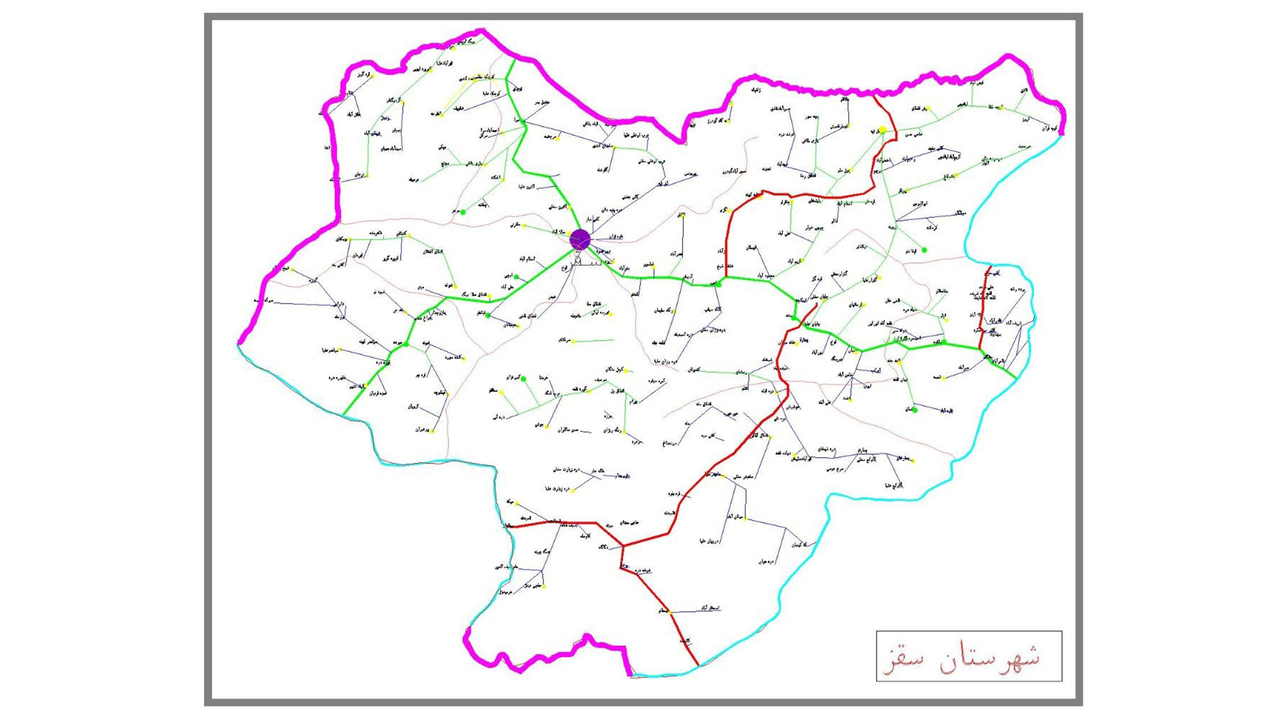
May 17, 2026; reports received by Kurdpa indicate the intensification of the economic crisis and livelihood pressure on the people in the city of Saqqez. According to these reports, the price of water, electricity, and gas increases continuously and simultaneously with the rise of the dollar rate, and in case of delay in paying the bills, an amount is added to its sum daily. Furthermore, the severe shortage of cash in banks, extensive disruption in banking applications, decrease in the value of small denomination banknotes after the printing of high-amount banknotes, and the daily increase in the price of basic commodities have confronted the daily life of citizens with serious problems.
This report has been prepared based on the accounts of several eyewitnesses regarding the situation of the market over the past week and the economic and livelihood conditions of the people in the city of Saqqez.
Eyewitnesses say:
Increase in the price of water, electricity, and gas accompanied by a daily fine for delay in payment
In the continuation of the wave of high cost of living and inflation, the increase in the price of water, electricity, and gas has inflicted a heavy economic pressure on the people. According to witnesses, many families no longer have the normal ability to pay the cost of these services, and the continuous increase in prices has severely affected the people's livelihood. According to reports, the price of water, electricity, and gas increases in a way that is practically linked to the dollar rate, not the value of the Rial; so that with every increase in the price of the dollar, the cost of these services also becomes higher. On the other hand, the method of calculating bills and the overdue fine has created a double pressure on the people. According to these reports, if bills are not paid in the designated time, the amount of debt increases on a daily basis. For example, if the amount of a gas bill is two million Tomans and its payment is delayed for seven days, its figure might reach two million and five hundred thousand Tomans. Witnesses say these policies have doubled the economic pressure on the people and made the living situation of many families more critical.
Shortage of cash, disruption in banks, and decline of small denomination banknotes
According to the accounts of witnesses, cash has become severely scarce in the market and people are forced to use banking applications and card readers for the smallest daily affairs and money transfers; while many banking applications, especially Melli Bank and Sepah Bank, are facing repeated disruptions and disconnections. It is also said that monitoring and inspection over banks have increased severely and bank employees are under intense pressure and control. According to witnesses, there is not enough cash in many banks and usually more than 500 thousand Tomans is not paid to a customer; and that is mostly with very worn-out 10 thousand Toman banknotes and after much persistence. According to these reports, with the printing of one million and 500 thousand Toman banknotes, 10 and 50 thousand Toman banknotes have practically lost their former utility. (Some local sources also say these banknotes have been printed in China for the Islamic Republic of Iran.) Witnesses also say that in the market, buying 100 dollars with 500 thousand or one million Toman banknotes entails a cost between one million and 800 thousand to two million and five hundred thousand Tomans. On the other hand, some individuals in neighboring countries keep Iranian cash, because they imagine that in the event of the fall of the Islamic Republic, these banknotes will gain value. According to witnesses, some individuals inside Iran also proceed to keep banknotes with this same imagination. According to local sources, the psychological and mental state of the people in terms of economics is very critical and the high costs increase on a weekly basis; in such a way that even in a city like Saqqez, a simple commodity is sold in different parts of the market with completely different prices. Furthermore, credit and installment sales have almost disappeared and many businesses are no longer willing to place a commodity at the disposal of the people on credit or installments; an issue that witnesses consider a clear sign of severe economic instability.
Daily increase in the price of bread, dollar, and gasoline and its impact on general high cost of living
Witnesses say that the continuous increase in the price of bread, dollar, and gasoline directly increases the price of all commodities and services and inflicts more pressure on the poor strata. According to information received on May 12, 2026:
Price of one dollar: 180 thousand Tomans
Price of one Lavash bread: 850 Tomans
Price of one liter of gasoline: 5 thousand Tomans
According to witnesses, these three items ostensibly are considered among the cheapest items in the market, but their prices are controlled artificially, because the government tries to ensure that even in the event of a further increase in prices, the people still have a minimal purchasing power. These three items might ostensibly still be the cheapest commodities in the market; and I am not saying this as a joke. If we look at the price of bread, dollar, and gasoline in comparison to the high cost of other commodities, it is clear that the government has kept their prices low artificially. Because the government knows that if the price of bread reaches 4 thousand Tomans, the dollar to 200 thousand Tomans, or gasoline to 10 thousand Tomans, the people again have the power to buy them. But the main problem here is that the increase in the price of these very three items directly causes dozens of other commodities to become more expensive and imposes more pressure and misery on the poor people.
Increase in the price of chicken and food products and halting of a part of production in Saqqez
The price of chicken and related products has increased significantly, and simultaneously, a part of the breeders have given up on continuing production due to the increase in costs. According to reports, the price of each kilogram of live chicken is between 355 to 400 thousand Tomans and each kilogram of plucked chicken is around 370 thousand Tomans, which has had an increase of about 50 thousand Tomans within just a few days, and it is said that in Sanandaj an increase of up to 100 thousand Tomans has even been registered. On the other hand, due to the severe increase in the price of soy, grain, and chicken feed, and also the rise in the price of one-day-old chicks, many poultry farmers in Saqqez have held back from breeding and producing chicken. According to one of the chicken breeders, the price of each one-day-old chick, which previously was between 5 to 10 thousand Tomans, has now reached 135 thousand Tomans. This breeder says: The cost of feed and maintenance of chicken has increased to such an extent that many poultry farmers, especially the financially weaker producers, no longer have the power to buy chicks and continue production. Also, with the approaching of the hot season, power outages and anxiety over the lack of electricity required to maintain the chickens have become another factor in halting production. According to these reports, the price of each kilogram of eggs has also reached 230 thousand Tomans and each kilogram of milk to 75 thousand Tomans.
Shortage of gasoline for the people and prioritization for government forces
According to local reports, gasoline for ordinary people is accompanied by shortages and long queues, but the provision of fuel for government forces is carried out without any problem. Witnesses say that the "Awinan (Ghadir Iranshah)" gas station, in addition to providing fuel for government forces, is also used as a temporary deployment location for these forces.
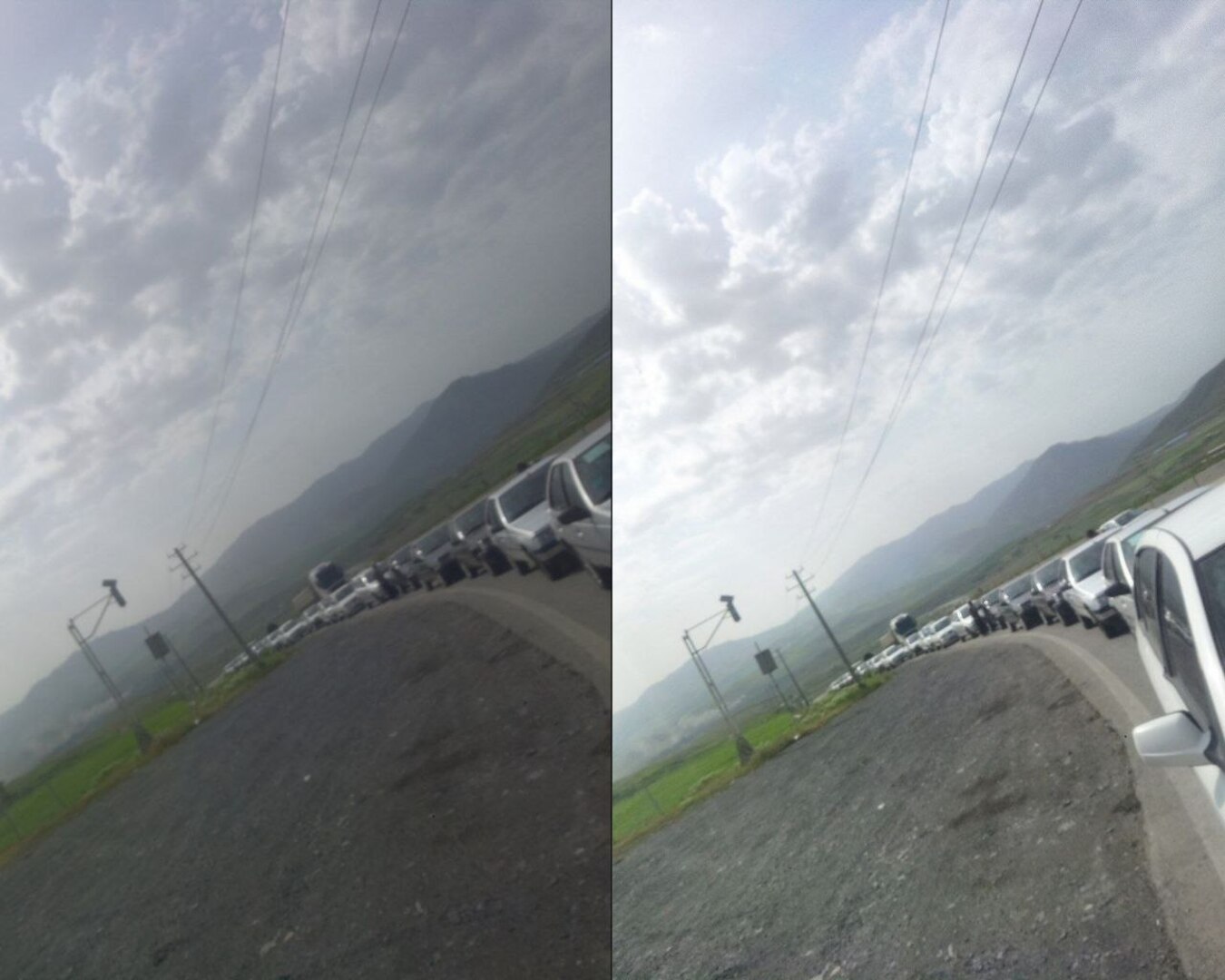
Two images related to the long queues for receiving gasoline for ordinary citizens in Saqqez.
In this regard and regarding the security-military situation in Saqqez, read also: