Saqqez in a Livelihood Squeeze; From price leaps and banking disruptions to worker unemployment and the removal of meat from the people's table
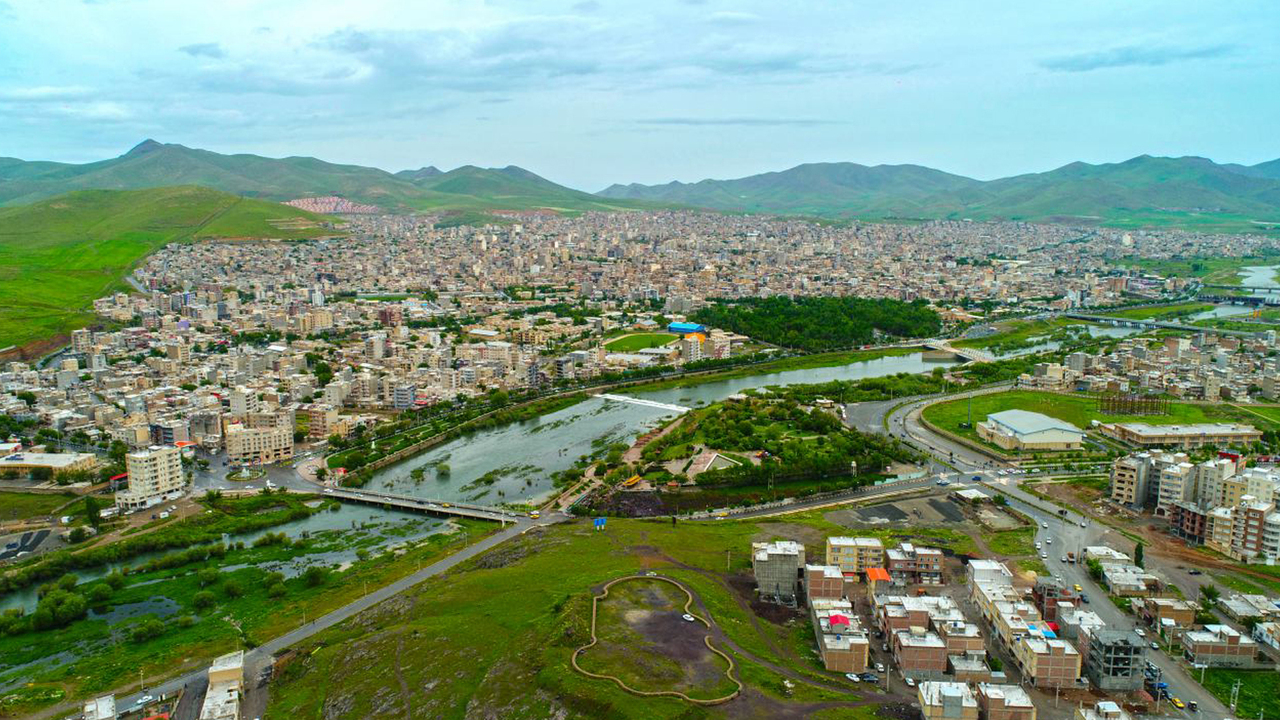
May 10, 2026; Reports and evidence reached Kurdpa over the past 9 days from the city of "Saqqez" in "Kurdistan" Province, indicating a soaring increase in the price of essential goods, a severe shortage of liquidity, frequent disruptions in banking services, stagnation and closure of production centers, increased unemployment, and unprecedented economic pressure on citizens. Popular accounts show that within just two weeks, the price of many consumer goods and raw materials has increased several-fold, while simultaneously, the purchasing power and livelihood of a large segment of society have severely declined.
This report is prepared based on the direct accounts of citizens who are active in the labor market and the city's economic environment and are directly or indirectly involved with the economic and livelihood status of the people. The information for this report reached Kurdpa in four stages on May 30, May 5, May 7, and May 9, 2026. What is noteworthy in this regard is not only the upward trend in prices but the speed of the increase in the rates of goods even within a few days; such that some citizens say the price of some items has doubled or tripled in just two weeks, and the differences are glaring.
First Account
April 30, 2026; Unprecedented inflation, housing crisis, and farewell to meat and poultry One citizen stated in their report that they spent 1,970,000 Tomans just to buy two chickens and that nothing cheap can be found anymore. They described the housing situation as critical, stating; in the city of "Saqqez," there is no house left for rent lower than a 500 million Toman deposit and 15 million Toman monthly rent, even for a small house with only one room and a kitchen. This citizen says inflation is not limited to main goods and even very simple daily items have faced a sharp price increase; for example, a single thin plastic bag at the bakery used for holding bread has reached 5,000 Tomans. Regarding the status of low-income groups and workers, they say: "No one knows what is happening to the workers. Many can no longer even feed their families. The price of essential goods has risen so much that vulnerable groups must practically say farewell to meat and poultry."
Second Account
May 5, 2026; Price instability, lack of liquidity, banking disruptions, and growing public concern about the future Another citizen says regarding the city's general atmosphere: "People are not in a good mental state; one day they are hopeful and the next day full of concern and fear of the future. Simultaneously, every day prices and living costs increase." According to them, the moment-by-moment increase in prices has caused a crisis even for sellers. A home appliance seller told them: "If I sell an item for one million Tomans today, tomorrow I must buy that same item for my own shop for one million five hundred thousand Tomans." At the same time, citizens report a lack of cash and widespread disruption in the banking system. One citizen says: "I went to Bank Melli three times in one week; all three times the bank system was down. Cash is not found at all either." They add: "The last time I was at the bank, a person requested cash but was told we have no cash at all." According to citizens, liquidity restrictions and banking disruptions have caused even the payment of common loans to stop; for example, "they no longer give marriage loans and suggest delivering goods instead of money." Citizens ask with concern: "In a situation where there is no cash and everything has become bank cards, which also constantly disconnect, if power plants are targeted, how should people withdraw their money from banks?"
Third Account
May 7, 2026; Closure of production, widespread unemployment, and daily leaps in market prices This citizen begins their account as follows: "The Iranian economy has become extremely fragile in the production sector, and many production centers have closed for various reasons." According to them, the lack of raw materials, high production costs, and the increase in energy rates and rents have made many production units unable to continue their activities. They emphasize: "Deprived and marginalized provinces like Kurdistan have suffered more than other regions," and to confirm their statement, they point to the situation of the "Saqqez" Industrial Town, saying: "By the beginning of May, more than 300 workers have become unemployed, and about 150 other workers are working for half-pay; this is while the total workforce of this town is about 600 to 700 people." According to this source, concurrent with the economic crisis, social harms have also increased sharply: "Theft, highway robbery, and earning income through abnormal ways have increased and led to the increase of the 'criminal survival' phenomenon." Regarding the mental state of society, they say: "People live in deep despair and severe concern about the future and have become mentally and psychologically worn out."
Multi-fold increase in prices over two weeks; from construction materials to daily goods This source says: "Until a month ago, people were waiting for the weather to improve so that perhaps labor and construction would thrive, but construction materials have also increased several-fold." According to them:
- The price of iron has reached 145,000 Tomans from 70,000 Tomans per kilo.
- Cement has increased from 215,000 Tomans per bag to 350,000 Tomans. They also point to the sharp increase in the price of consumer goods:
- Roll freezer bags have reached 300,000 Tomans from 100,000 Tomans.
- Disposable tablecloths have increased from 80,000 Tomans to 250,000 Tomans.
- "Sehat" shampoo, which was sold for 80,000 Tomans, is now purchased for 200,000 Tomans.
- Single blankets have reached two million Tomans from one million 100 thousand Tomans.
- A carton of hand-wash laundry powder has increased from 980,000 Tomans to one million 800 thousand Tomans.
Plastic bags used by shops have reached 650,000 Tomans from 250,000 Tomans. They emphasize that the bulk of these price increases occurred in the span of about two weeks. This citizen points out that incidental costs have also become astronomical; the cost of repairs and insurance for a car (including disks, pads, exhaust, and labor), which was 10 to 12 million Tomans last year, has now reached 33 million Tomans.
Fourth Account
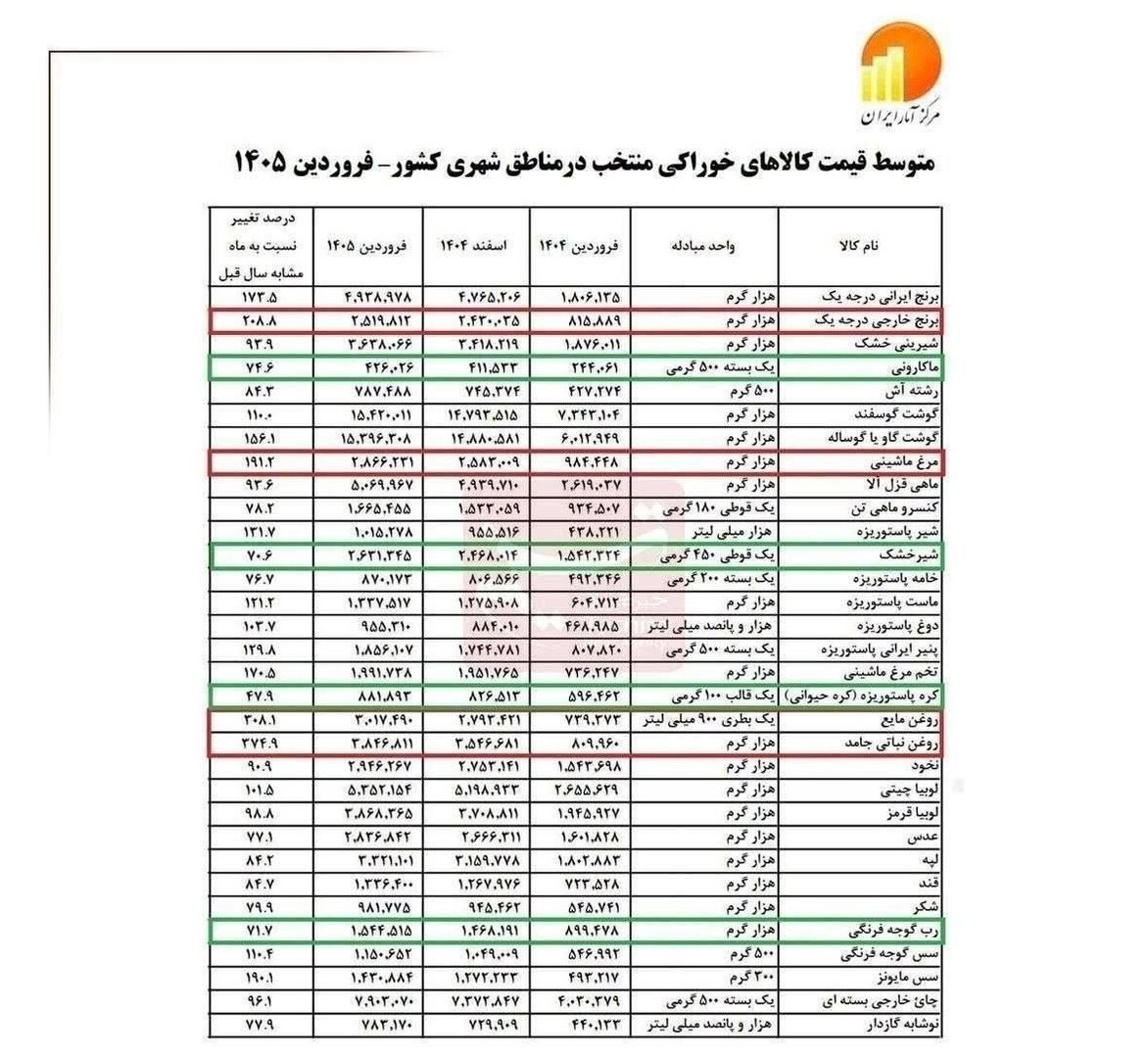
May 9, 2026; Comparing the gap between government statistics and the bitter market reality; prices that go higher every day This citizen expresses their account by providing a list of the prices of some basic goods for people as follows:
- Egg tray: 500,000 Tomans
- Each kilo of chicken meat: 350,000 Tomans
- 5-kilo oil (which was previously 400,000 Tomans): 2,400,000 Tomans
- Rice (which was 700,000 Tomans last winter): 2,500,000 Tomans
- Sugar and cube sugar: Price increase by 2-fold
- Detergents and plastic items: 2 to 3-fold increase due to dependence on petrochemicals Then, by sending a table of some basic goods prices published by the Statistical Center of Iran, this citizen says: "Even this official table shows a sharp increase in prices, but the real market price is higher than these figures." They add:
- Family soda, recorded as 78,000 Tomans in the table, is now sold between 110,000 and 120,000 Tomans.
- Per-kilo cube sugar, announced as 133,000 Tomans, is 150,000 to 170,000 Tomans in the market.
- Beef listed at the rate of 1,500,000 Tomans is bone-in meat, and pure meat costs about 1,800,000 Tomans.
- 800-gram liquid oil is sold for about 350,000 Tomans instead of 300,000 Tomans.
- Rainbow trout is between 550,000 and 600,000 Tomans instead of 500,000 Tomans.
Machine-raised chicken has reached about 360,000 Tomans from 286,000 Tomans. They emphasize that items such as soap and cleaning agents have been intentionally removed from government lists because their inflation percentage is much higher, and war damage to petrochemicals has raised the price of plastic products to the point that the government is afraid of publishing it. This government list, alongside showing part of the inflation, contains a kind of "oversight and security consideration"; because prices are practically increasing on a daily basis. It is observed that with the start of conflicts from the beginning of February, the government has consciously increased prices and used war conditions in its own favor and against the people's livelihood.
Edited by: Awin Mostafazadeh