Execution of Shahram Sadeghi, the 27th Protester: On Charges of Espionage Based on Injury to Several Repressive Forces and a Single "Yes" in Forced Confession Video
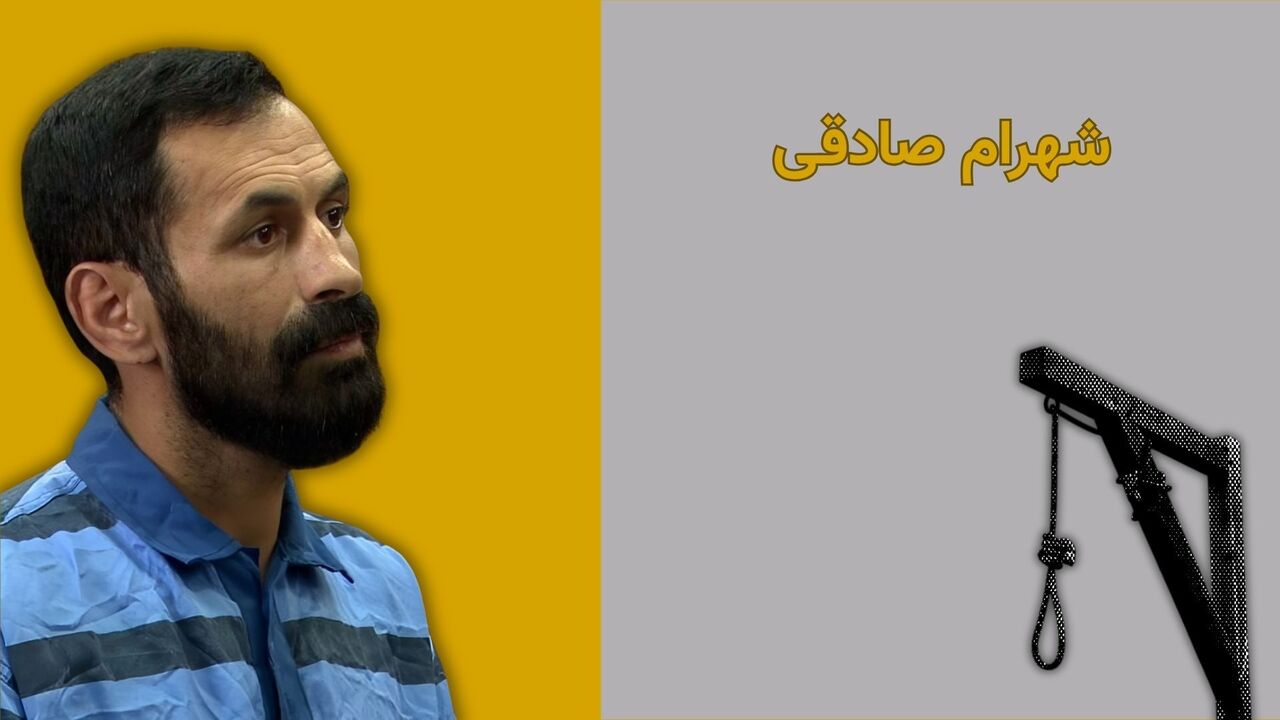
August 16, 2026; Mizan News Agency, affiliated with the Judiciary of the Islamic Republic of Iran, announced this morning, Sunday, August 16, the execution of "Shahram Sadeghi", another protester from the January 2026 protests. The Islamic Republic executed this citizen on charges of "espionage" and based on the law intensifying the punishment for espionage; this comes while in the video published by this media outlet, only a few seconds of Shahram Sadeghi's face and a single word, "Yes", spoken by him are seen and heard. This sentence was executed in a secretive, ambiguous, and non-transparent process, and Mizan News Agency did not even mention the location of the execution or the fate of his body.
Without providing details about the judicial proceedings, the number and nature of court sessions, how the defendant had access to a lawyer—whether chosen or court-appointed—the lawyer's access to the case file, how his defense was presented in court, or how the right to appeal the sentence was exercised, Mizan News Agency provided no information regarding the case process. Furthermore, seven months after the January protests, the date of Shahram Sadeghi's arrest also remains unknown. In the report it published, this media outlet merely relied on a 22-second video showing a car hitting repressive forces during the January protests, images of injured individuals in the hospital, and a few seconds of Shahram Sadeghi's image, during which only the single word "Yes" was broadcast from him.
Mizan News Agency claimed that during the protests on January 8, at "Golzar Intersection in Karaj", Shahram Sadeghi ran over several officers with a Pride vehicle and criminalized this action under what the Islamic Republic calls an "American-Zionist coup", labeling it as an "operational action in favor of the Zionist regime, the US, and hostile groups" and "cooperation with the Zionist regime and hostile countries against national security and interests" subject to Article 1 of the Law Intensifying the Punishment for Espionage.
While the Judiciary cited the act attributed to Shahram Sadeghi as the "death car" and the reason for issuing the death sentence, according to the same report, none of the "FARAJA" (police) forces lost their lives, and this incident merely resulted in injuries to the hands, legs, and eyes of seven officers. Mizan News Agency also claimed that one of these officers was in a coma for a period.
This media outlet offered no explanation regarding the date of Shahram Sadeghi's arrest and claimed that he was identified and arrested after "identity forgery" in an "addiction rehabilitation camp". In explaining what it called the protester's "confessions", Mizan claimed that he stated he ran over the officers with the vehicle without them giving him a stop order. However, the video released by this media outlet shows only a few seconds of Shahram Sadeghi's face and a single word, "Yes", followed by images of injured individuals with covered faces in the hospital.
According to the report by Mizan News Agency, Shahram Sadeghi was sentenced by the Revolutionary Court of Karaj to execution and "confiscation of all assets" on charges of "operational action in favor of the Zionist regime, the US, and hostile groups subject to Article 1 of the Law Intensifying the Punishment for Espionage and cooperation with the Zionist regime and hostile countries against national security and interests", and this sentence was affirmed by the Supreme Court and executed this morning.
Since March 18, 2026, the Islamic Republic has executed at least 27 people in connection with the January 2026 protests. The names of these individuals are: Saleh Mohammadi, Said Davoudi, Mehdi Ghasemi, Amirhossein Hatami, Mohammadamin Biglari, Shahin Vahedparast Kolvor, Ali Fahim, Amirali Mirjaafari, Erfan Kiani, Sasan Azadvar, Ebrahim Dowlatabadi-Nejad, Mehdi Rasouli, Mohammadreza Miri, Mohammad Abbasi, Abbas Akbari Feizabadi, Ashkan Maleki, Mehrdad Mohammadinia, Fathollah Avari, Javad Zamani, Abolfazl Saedi, Mohammad Amini Dehaqani, Erfan Esfandiari, Gol-Mohammad Mohammadi, Mehdi Khanki, Abolfazl Sepahi Badjani, Amirhossein Safari Hosseinabadi, and Shahram Sadeghi.