Execution Statistics in the 7th Month; 71 Executions Recorded Across 26 Iranian Prisons; 7 Political Prisoners Executed in Undisclosed Locations and Publicly
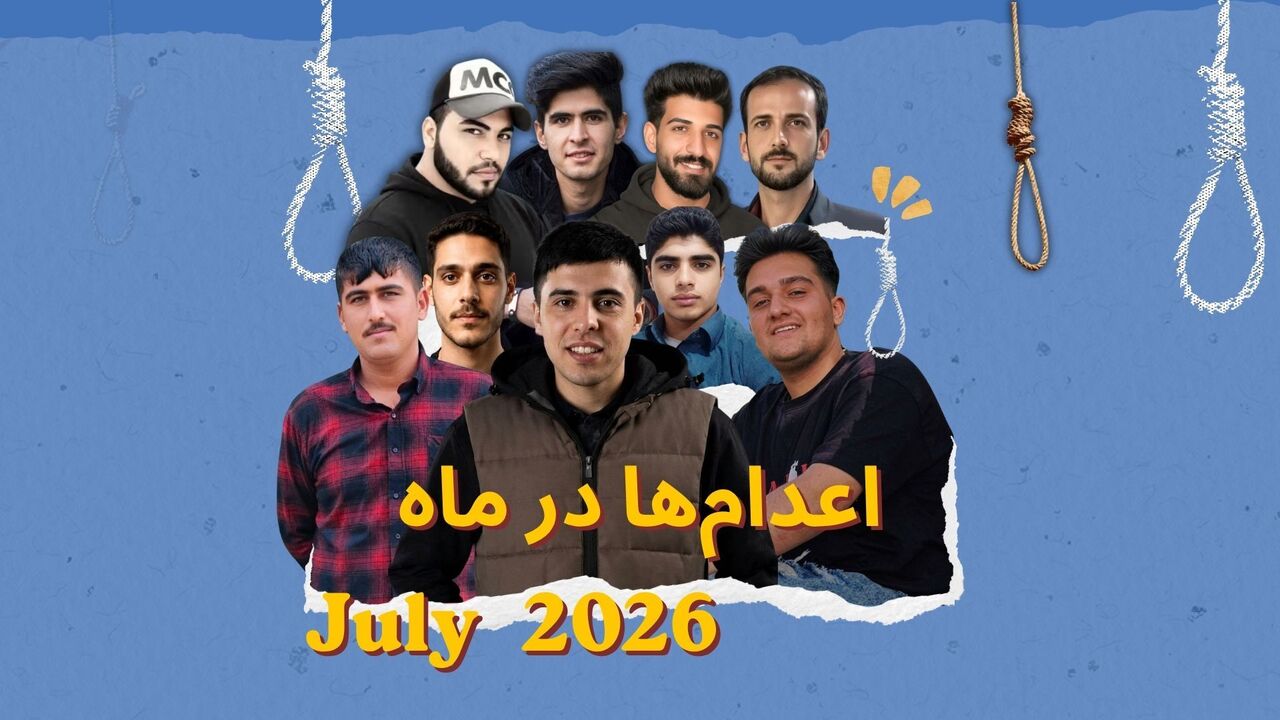
August 7, 2026 – Kurdpa Human Rights Organization recorded the execution of at least 71 individuals in Iran during the seventh month of 2026 (July) across 26 Iranian prisons, 6 cases in undisclosed locations, and 2 in public. Among those executed were 7 political prisoners (including 6 connected to the January 2026 protests and 1 connected to the "Jin, Jiyan, Azadi" uprising) and 2 security prisoners affiliated with religious extremist groups. Over 50% were executed in connection with "murder" charges and 36% in connection with "drug offenses." Additionally, 2 were women, 1 was a child-offender, and another was likely a child-offender.
Regarding executions in the first 6 months of 2026, Kurdpa recorded statistics for 359 individuals, and has documented 9,149 executions over the past 15 years.
Representation of Execution Statistics in July 2026;
71 individuals were executed across 26 Iranian prisons, 6 in undisclosed locations, and 2 in public.
Among those executed, 7 were Kurdish citizens, 4 were Baluch citizens, 1 was a Turk citizen, 1 was a Turkmen citizen, and 4 were Afghan nationals.
6 political prisoners and January 2026 protesters—including "Mohammadamin Dehaqani," "Erfan Esfandiari," "Gol-Mohammad Mohammadi," "Mehdi Khanki," "Abolfazl Sepahi Badjani," and "Amirhossein Safari Hosseinabadi"—were executed in undisclosed locations on charges of "espionage," "moharebeh," "efsad-fil-arz," "destruction of public property," and "murder." Among them, "Abolfazl Sepahi Badjani" and "Amirhossein Safari Hosseinabadi" were executed publicly in the city of Isfahan.
"Aref Khoshkar," a political prisoner and detainee of the "Woman, Life, Freedom" (Jin, Jiyan, Azadi) revolutionary uprising, was executed in Ghezel Hesar Prison on charges attributed to the "murder of a government figure."
Furthermore, "Mohiaddin Abdollahi" and "Hossein Palani," two Kurdish citizens, were executed on charges of "baghi" (armed rebellion) in connection with "ISIS."
Of the total count, 36 were executed on murder charges, 26 in connection with drug offenses, and 1 on charges of "rape."
Among those executed, 2 were women, and a Kurdish citizen named "Farzad Sobhani" from the city of Naghadeh was under 18 years of age at the time of the alleged "commission of murder." Additionally, "Meysam Irandegani," a Baluch citizen executed in the city of Iranshahr on murder charges, was likely under 18 years old.
Over 94% of the 71 executions were not reported by official government media, and 67% were executed in groups of two to several individuals. However, the government fully publicized the executions of political prisoners or those facing "security" charges.
Longitudinal and Structural Execution Data Over the Past 15 Years (2012 – First Half of 2026);
First Half of 2026 Statistics: Out of more than 359 executions across Iran, Kurds with 30 individuals and Baluchis with 28 individuals account for the highest ethnic execution statistics. 9 of those executed were women, and 4 were hanged in public.
Unprecedented Surge in Political Executions: In just 5 months, from January 17, 2026 (Dey 27, 1404) to June 16, 2026 (Khordad 26, 1405), the death sentences of 46 political and conscientious prisoners were executed in a hasty and secret manner—representing the highest count in the shortest timeframe since the 1980s. This figure includes 20 January 2026 protesters, 14 individuals accused of espionage (reflecting an unprecedented surge in 2025 and 2026), 11 accused of "baghi," and one "Woman, Life, Freedom" protester; forced confession videos were broadcast for 30 of them.
15-Year Longitudinal Data (2012 to 2026): Out of at least 9,078 executions in the country—with a record 1,563 cases in 2025, 250 women, 50 child-offenders, and 297 public executions—the identities of 980 Kurdish citizens have been verified.
Index of Structural and Ethnic Oppression: Although Kurds constitute just over 10% of Iran's population, they account for 30% of all political executions (45 out of 149 people) and 82% of religious/ideological executions (24 out of 29 people) nationwide.
Systematic Patterns of Human Rights Violations Against Kurds:
Enforced Disappearance of Bodies: Withholding the bodies of executed Kurdish political prisoners from their families in over 95% of cases.
Deprivation of Defense Rights: Absolute deprivation of independent legal counsel and mock case engineering by state-appointed security lawyers, as seen in the case of Mehrdad Mohammadinia.
Multi-Layered Pressures: Geographic torture, forced transfer to Tehran and provincial centers, economic retaliation against families (cutting off subsidies and pensions), de-localization and ethnic hate-mongering by non-native judges in the province of Kurdistan, and the use of "preventative executions" to intimidate society.
Related reading: Report on 6 months of structural repression recording over 1,430 cases of gross human rights violations in Iranian Kurdistan.