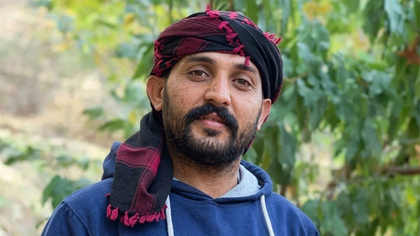
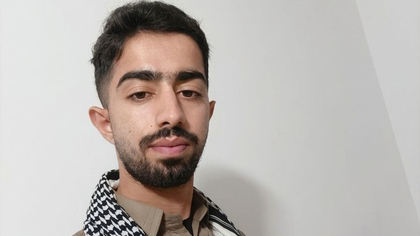
The Family of Mojtaba and Meysam Veisi; They Rejected Any Political Affiliation and Emphasized Their Independent Cultural Activity
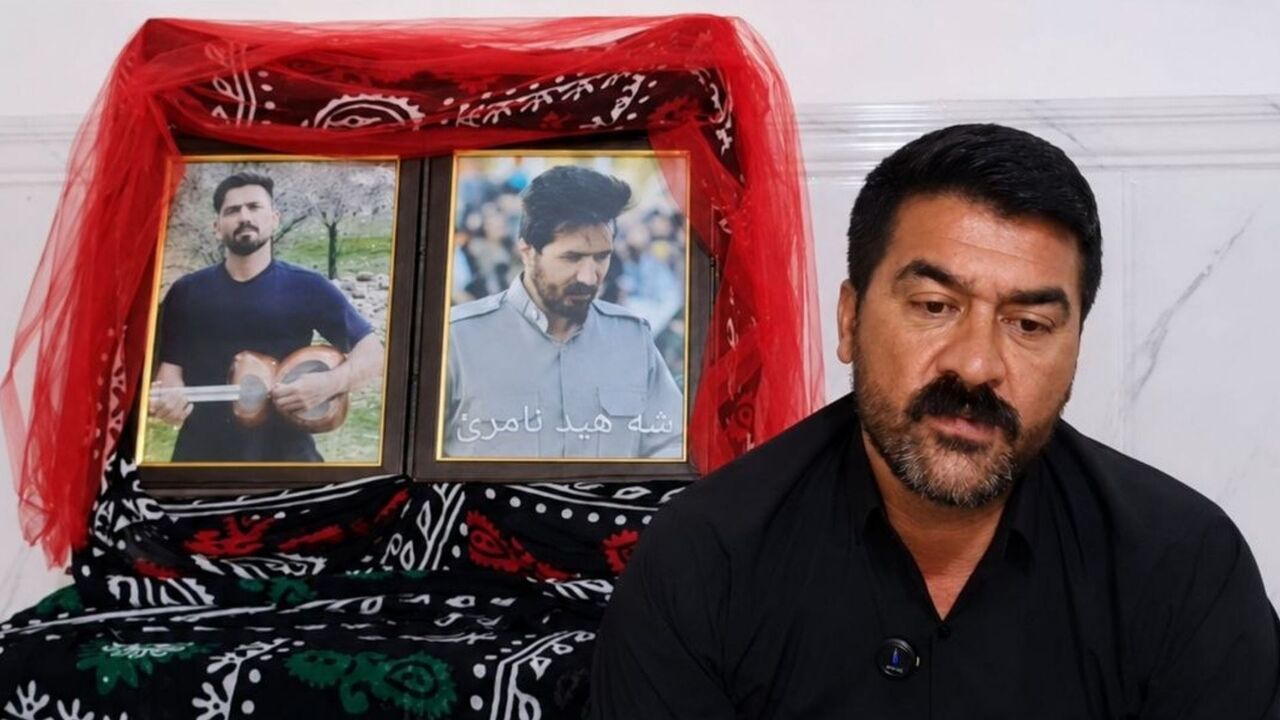
June 13, 2026; Passing 17 days since the state and extrajudicial killing of Mojtaba and Meysam Veisi, two Kurdish Yarsani brothers from the city of "Dalahu" who had been pursued by security forces with the aim of arrest since the protests of December 2025/January 2026, and following the narratives of state media claiming they were killed due to "armed participation in the December 2025 protests" and "sympathizing with counter-revolutionary groups", their brother and sister published videos rejecting their membership and sympathy for political parties and currents, emphasizing the independence of their cultural activities for Kurdish identity and language. They also called for naming the day of their state and extrajudicial killing as the "Day of Books and Libraries".
Pari Veisi, the sister of these two killed young men who is outside of Iran, says in this video: "I offer my greetings and respect to all freedom-loving people, the Kurdish people, and Kurdish-lovers across the world. I am Pari Veisi, the daughter of Mostafa and the sister of the two recent martyrs of Kurdistan, Mojtaba and Meysam. From the time of their martyrdom until today, many cultural, legal, linguistic, literary, cultural, and civil associations have expressed solidarity with our family, the Kurdish nation, and all the people of Kurdistan, fulfilling their great Kurdish duty, for which I am deeply grateful to all of them. My brothers sacrificed their lives in the path of teaching and sustaining Kurdish identity, and the owner of this path is the entire nation of Kurdistan, with whatever language, culture, and religion they have. The martyrs Mojtaba and Meysam had no affiliation whatsoever with any political party or organization, and their only crime was helping Kurdish children in the fields of music, art, and Kurdish language through establishing the 'Darreh Derizh' library in the city of "Kermanshah". The government of the Islamic Republic turned this into an unpardonable crime for them, and unfortunately, this government did not allow them to serve any further, and a few weeks ago they shielded Kurdish and Kurdistan with their lives. Once again, on behalf of myself and my family, I express my gratitude to all you loved ones who held weekly ceremonies and commemorated the memory of these two martyrs for the Kurdish nation during this period. May the path of the martyrs Mojtaba and Meysam remain green among the Kurdish people, and may you all be healthy. The little sister of you all; Pari Veisi."
The elder brother of Mojtaba and Meysam Veisi also says in a video where the picture of these two brothers is next to him: "I offer my greetings and respect to dear sisters and brothers. As the elder brother of the martyrs Mojtaba and Meysam Veisi, I tell the public opinion that one of the biggest concerns of Mojtaba and Meysam was the distancing of the people of the city of "Kermanshah" from their own identity and language. These two Kurdishstani martyrs believed that Lak, Sorani, Kalhor, and Jaf are all one and there is no difference between them. Their struggle was purely cultural and for the Kurdish language and identity, and as they themselves had said in their handwritten notes, their thinking was independent, and they belonged to no group, party, or political current. In conclusion, I request the cultural and artistic community to name the day of the martyrdom of Mojtaba and Meysam as the Day of Books and Libraries. I am grateful to Kurds across all four parts of Kurdistan."
In the early hours of Thursday, May 28, 2026, two Kurdish Yarsani brothers from the city of "Dalahu" named "Mojtaba Veisi" and "Meysam Veisi", who had been pursued by security forces with the aim of arrest since the protests of December 2025/January 2026 and were hiding in the village of "Ghaleh Kahvash" surrounding the county of "Dalahu" in the province of "Kermanshah", were targeted and killed by Islamic Revolutionary Guard Corps (IRGC) forces after their hiding place was identified by the Intelligence Organization of the IRGC. These two brothers had previously been targeted multiple times with summonses and threats by security agencies, and Mojtaba Veisi also had a background of arrest and conviction.
Leveling Accusations and Distorting the Narrative After Killing Mojtaba and Meysam Veisi; From Media Narrative to Lack of Judicial Investigation:
State media, including Mizan News Agency and media affiliated with the Islamic Republic, in their narrative of the state and extrajudicial killing of these two cultural activists who were directors of the "Darreh Derizh" library of the city of "Kermanshah", attributed them to "sympathizing with counter-revolutionary groups" and "elements of the December 2025 riots and the killing of some security forces".
These media outlets, by publishing an image of these two brothers holding weapons, linked their being armed and their extrajudicial killing to participation in the December protests and the accusations attributed to them. This is while according to reliable sources in the region of "Kermanshah", due to the tribal and nomadic structure of the region, as well as the historical background of the ruling governments in Iran using the people of these border areas as border guardians, possessing weapons is a customary matter, and there is no credible report of conflict or armed uprising against the country in these regions.
Also, these sources point out the contradiction in the government's narrative and say that since the beginning of the recent war which started in February/March 2026, the government has brought its supporters to the streets every night in different parts of Iran, and in these regions as well, the presence of armed individuals in these ceremonies has been considered a normal matter, but in the case of these two brothers, this very subject has been used as the basis for raising extrajudicial accusations.
On the other hand, the Islamic Republic of Iran Broadcasting (IRIB) in a report introduced these two brothers as "members of the PAK Party". In this video report, the attack of dozens of armed state forces on the village of "Ghaleh Kahvash" and the hiding place of these two brothers is depicted, claiming that they were killed after a clash.
However, in this ambiguous 18-second video, only scenes of the attack on the village, the sound of gunfire, and the killed bodies of these two brothers are shown with blurred images. While the official narratives emphasize "being armed" and "clash", no image of weapons in the possession of these two brothers at the time of being killed or weapons discovered after the operation has been published.
This is while the Islamic Republic, in similar cases, including files related to armed individuals, executed persons, or protesters whom it accuses of espionage or cooperation with other groups, usually publishes images of discovered weapons after the arrest or killing of individuals. The absence of such images in this file has left serious questions and ambiguities regarding the official narrative of how Mojtaba and Meysam Veisi were killed.
The state and extrajudicial killing of these two brothers and cultural activists occurred while even after their killing, no independent judicial file has been opened to investigate the accusations attributed to them so that it could be determined in a fair, public, and impartial judicial process on what legal basis and documentation the claims raised by state institutions were founded. Consequently, the official narrative of the government, without being subjected to judicial review, independent evaluation of evidence, and the possibility of defense for the accused, has been presented as the final narrative, and the possibility of clarifying the truth, verifying claims, and the accountability of responsible institutions has practically disappeared.
With reference to the fundamental principles of human rights, it can be argued that the killing of Mojtaba and Meysam Veisi possesses serious components of a state and extrajudicial killing; because:
The right to life, which is guaranteed in Article 3 of the "Universal Declaration of Human Rights" and Article 6 of the "International Covenant on Civil and Political Rights", can only be deprived under very exceptional circumstances and within the framework of absolute necessity. In this file, there was no judicial verdict, trial, or legal decision to deprive these two individuals of life.
The principle of presumption of innocence and the right to a fair trial requires that every individual be assumed innocent before guilt is proven in a competent, independent, and impartial court. Mojtaba and Meysam Veisi were killed prior to any trial or issuance of a verdict, and were therefore deprived of the right to defend themselves, access to a lawyer, and judicial investigation.
Following their killing, the government raised accusations such as "sympathizing with counter-revolutionary groups" or "connection with the December protests" through official media; however, no public judicial file, court ruling, or verifiable documentation has been presented to prove these claims. From a human rights perspective, the attribution of a crime after death and outside the judicial process lacks evidential value.
In accordance with the "United Nations Principles on the Effective Prevention and Investigation of Extra-legal, Arbitrary and Summary Executions", every case of death resulting from the actions of state forces must be investigated independently, impartially, promptly, and effectively. However, so far no report of the formation of an independent fact-finding committee or the start of judicial investigations regarding how these two brothers were killed has been published.
The lack of independent investigations, the failure to reopen a judicial file, the inability to review the raised claims, and the deprivation of the victims of the right to trial result in the official narrative of the government alone being unable to prove the legal legitimacy of the lethal use of force, and the state's responsibility for accountability remains in place.
Based on this, until an independent and impartial investigation is conducted regarding how Mojtaba and Meysam Veisi were killed and the claims raised are investigated in a fair judicial process, this event, from a human rights perspective, possesses serious signs of arbitrary deprivation of the right to life and extrajudicial killing.