Execution of Ashkan Maleki; Secretive and Hasty, Family Kept Entirely Unaware of Case and Court-Appointed Attorney, Denied Even the Right to Uncover His Shroud
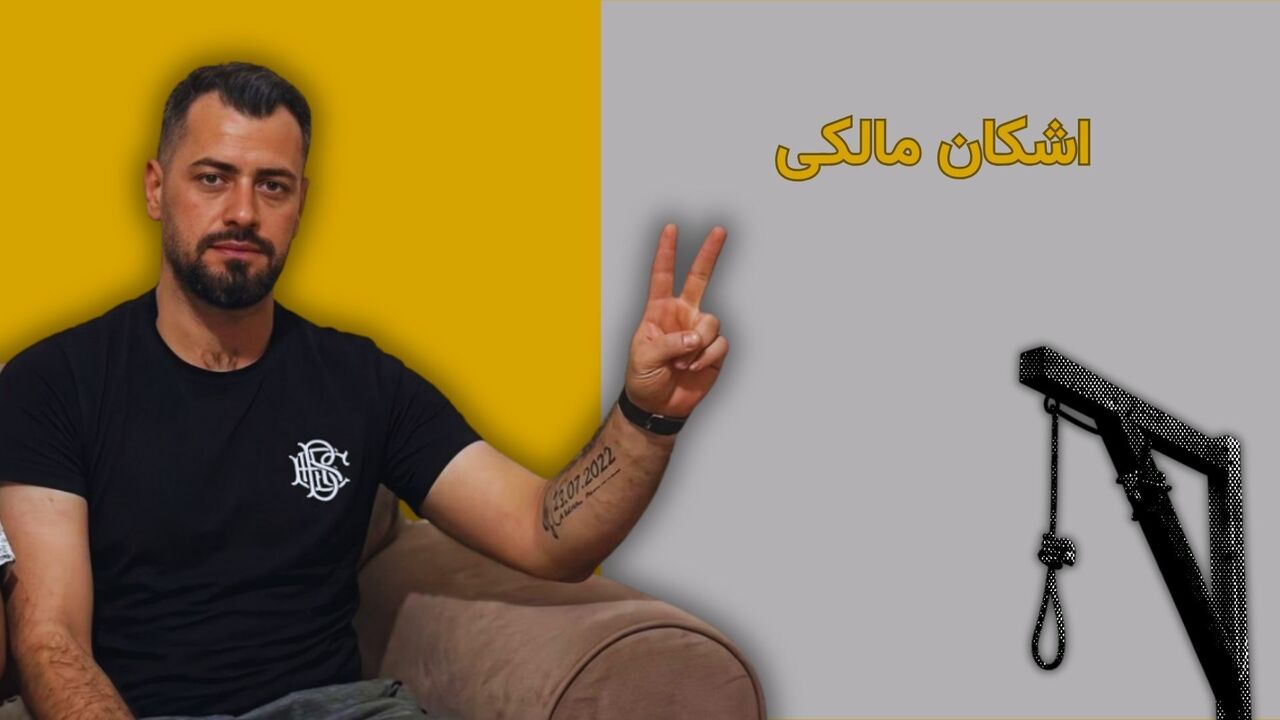
July 25, 2026 – The secretive and hasty execution of "Ashkan Maleki" alongside "Mehrdad Mohammadinia" on May 31, 2026—both protesters arrested during the January 2026 demonstrations—was carried out in a span of less than five months from detention to execution under a completely unfair judicial process. This process relied heavily on forced confessions, the official state narrative, a government-aligned court-appointed lawyer, and absolute secrecy at all stages of the case. Reports indicate that the family was kept entirely in the dark regarding the progression of the case, the identity of the court-appointed attorney, the trial schedule, and even the execution date. Following his execution, they were deprived of the right to a final visit, conducting the ritual washing and shrouding, and even uncovering their son's face from the shroud.
This report, based on an interview with an informed source, aims to expose the details of the unfair execution and the government's cover-up in Ashkan Maleki's case, illustrating how January 2026 protesters are sentenced to death and executed in a rushed, covert manner lacking basic guarantees of a fair trial. To protect the source's security, identifying details are withheld.
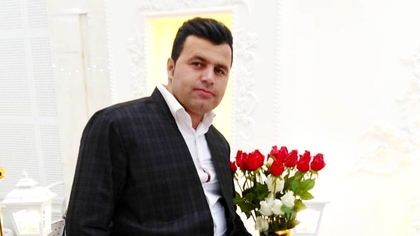
Ashkan Maleki; A Simple Kurdish Worker at the Tehran Wholesale Produce Market
The informed source began their account to Kurdpa by stating: "Ashkan grew up in extreme hardship and experienced little joy in life. He was a Kurdish citizen from Qorveh and a simple laborer at the Tehran wholesale produce market, having moved from Qorveh to Tehran for work. He was 37 years old, unmarried, and the father of two children—an 11-year-old daughter and a 4-year-old son. He had very little formal education, having completed only the third grade, and this lack of literacy was exploited during interrogations to fabricate false charges and extract signed confessions under torture."
The Family Exhausted Every Option, But Independent Counsel Was Denied; The State Imposed a Court-Appointed Lawyer Unknown to the Family
The source told Kurdpa: "The family tried everything, but they were denied the right to retain independent legal counsel. The family even signed a contract and paid money to an independent attorney to handle the case, but the court refused to admit the lawyer, who subsequently returned the money. The family made every effort to help him, but authorities blocked any chosen attorney from accessing the file. Instead, the court and the state assigned a court-appointed lawyer. The family had zero visibility into the proceedings, did not know who the court-appointed lawyer was, or what was happening in the case."
Ashkan Swore on the Quran in Court That He Had Only Burned Two Motorcycles
According to the source, the sole accusation against Ashkan was the burning of two motorcycles. The source recounted: "On that night, Ashkan and Mehrdad went out to buy cigarettes. When they stepped outside, a large crowd had gathered; they had not intended to participate in the protests and were not wearing masks, unlike many others present. During the commotion, a tall woman wearing a mask handed them a bag to throw. Ashkan threw the bag toward the motorcycles—not the mosque—and only two motorcycles caught fire. No mosque was set on fire by them, and Mehrdad had only broken a window."
The source added: "Ashkan could rarely call his family, but he swore that in court he placed his hand on the Quran and testified that he had only burned two motorcycles—a detail entirely omitted from the state's broadcast of the trial."
Death Sentence Issued Based on Forced Confessions and a Minutes-Long Trial, Without Court-Appointed Counsel Present and on a Secretive Date
The source told Kurdpa: "The family was given no information about the trial and was not permitted to attend. However, in brief phone calls, Ashkan mentioned that during interrogations he was given a document to sign without knowing its contents due to his minimal literacy. Ultimately, Judge Salavati sentenced him to death, and to this day, the family remains entirely unaware of the case proceedings or the identity of the court-appointed lawyer."
On February 21, 2026, just 44 days after the arbitrary arrests of Mehrdad Mohammadinia, Ashkan Maleki, and Arman Marefati, Mizan News Agency, the official media outlet of the Islamic Republic's Judiciary, published news, photographs, and a 1-minute-and-48-second video clip showing the trial of the three political prisoners at Branch 15 of the Tehran Islamic Revolutionary Court. The session was presented under the title "Case of Defendants in the Arson and Destruction of Jafari Mosque and Imam Hadi Seminary in Koy-e Nasr."
This marked the first time their arrests were publicly disclosed. In the published media, all three political prisoners appear in prison uniforms. Mizan News Agency claimed the hearing took place in the presence of the associate judge, defense attorneys, the prosecutor's representative, and individuals related to the case.
However, in the footage, only individuals wearing black uniforms with blurred faces are seen behind and around the prisoners, along with the prosecutor's representative and likely a mosque custodian. There is no trace of independent attorneys, family members, or neutral observers, and even the judge's face is obscured.
The majority of the coverage focused on statements by the prosecutor's representative concerning the Jafari Mosque and its history. No details were provided regarding the defense statements of the prisoners or attorneys, leaving the narrative highly ambiguous. In the 1-minute-and-48-second video, approximately 25 seconds feature the prosecutor's representative (face blurred), and another 25 seconds feature another individual, presumably the mosque custodian (face also blurred), describing individuals entering the mosque without naming them.
In the same report, Ashkan was named as the primary defendant, and approximately 40 seconds of his statements were broadcast, in which he reiterated the account provided to Kurdpa: that he had only set fire to two motorcycles. Nevertheless, news reports released by the Judiciary cited their death sentences as being based on the charge of "arson of the Jafari Mosque."
Secretive Double Execution of Mehrdad and Ashkan
According to Mizan News Agency, Ashkan Maleki and Mehrdad Mohammadinia, who were arrested in connection with the January 9 protests in Tehran, were executed on May 31, 2026. While official reports omitted the location of the execution, informed sources told the Iran Human Rights organization that the executions were carried out at Ghezel Hesar Prison in Karaj. The executions of Mehrdad Mohammadinia and Ashkan Maleki, both Kurdish citizens, were conducted secretly without prior notice to their families, who were also denied a final visitation.
Regarding the secret execution and the refusal to allow the family to even uncover Ashkan's shroud, the Kurdpa source stated: "Ashkan was executed secretly without prior notice and without the right to a final family visit. The family had no idea the execution was imminent. Without providing any information or allowing family visits, they executed him at dawn. Prior to the execution, Ghezel Hesar Prison officials requested two million Toman from Ashkan. Ashkan called his family asking them to transfer the money to his account, but it was later revealed the funds were meant for his shroud. The authorities conducted the ritual washing and shrouding themselves, denying the family the right to do so or to even view his body or open the shroud."
According to the source, security and plainclothes personnel were present at the burial. Nonetheless, Ashkan's funeral took place in his hometown of Qorveh, attended by family, relatives, and acquaintances.
Parallel Case of Mehrdad Mohammadinia; Extortion by Court-Appointed Attorney and Execution on Fabricated Charges
The secretive execution of Ashkan Maleki occurred alongside that of his co-defendant, Mehrdad Mohammadinia (27 years old, a simple laborer from Qorveh), who was also hanged within five months under the same expedited scenario. An examination of Mehrdad Mohammadinia's case highlights how the judicial and security apparatus systematically eliminated evidence of innocence to clear the path for capital sentences.
- Rebuttal of Charges Through Material Evidence and Video Footage: Based on defense appeal documents, Mehrdad had only admitted to breaking a few windows due to the surrounding chaos. CCTV footage from his workplace proved he was not present at the seminary during the arson (evidenced by differing clothing colors from the perpetrators), a fact corroborated by the seminary custodian's testimony. Nevertheless, at the sentencing stage, the Revolutionary Court added severe charges of "arson of the seminary" and "espionage for hostile states" without prior notice during preliminary interrogations or supporting evidence.
- Extortion of 2.6 Billion Toman by Court-Appointed Attorney: After independent attorneys were barred and the initial court-appointed lawyer was removed, an attorney named "Younes Karimi" was assigned as court-appointed defense counsel. Exploiting the desperate situation of Mehrdad's impoverished rural family, this attorney covertly extracted 2.6 billion Toman (along with gold coins and gifts) outside the official judicial portal (SANA system), despite being legally prohibited from receiving any fees and without visiting his client in prison even once.
Two Executions of January Protesters in the State Execution Apparatus
The cases of Ashkan Maleki and Mehrdad Mohammadinia exemplify a unified pattern: a process in which two low-literacy, impoverished laborers were subjected to the denial of chosen legal counsel, forced confessions extracted under torture, minutes-long trials, and structural corruption among court-appointed attorneys, ultimately becoming victims of security fabrications. The simultaneous, secretive execution of these two Kurdish citizens on May 31, 2026, at Ghezel Hesar Prison—without family notification or final visitations—underscores a deliberate effort to expedite death sentences to instill fear across society and erase the traces of an unfair judicial process.
Compiled by: Awin Mostafazadeh