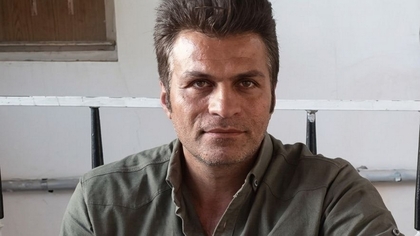
Qorveh Prison; Execution of Afshin Davoudi; an Execution Disclosed After Five Months

June 17, 2026; over the past five months, the death sentence of a Kurdish prisoner named "Afshin Davoudi," who had been sentenced to Qesas (retribution-in-kind) on the charge of "premeditated murder," was executed in Qorveh Prison.
An informed source, while confirming this news to Kurdpa, stated: "Afshin Davoudi," 28 years old, a resident of Dehgolan County and from the village of "Gorganeh," was executed in Qorveh Prison on January 14, 2026, on the charge of "premeditated murder"; however, due to internet shutdowns and communication restrictions, the news of his execution has been disclosed after five months, in June 2026.
Kurdpa's informed source states regarding Afshin Davoudi's case: In September 2023, around 2:00 AM and after returning from plowing agricultural lands, while his brother was not present at home, he noticed an individual named "M.S." entering his brother's house and engaged in a physical altercation with him. During this altercation, that individual fled.
According to this source, this incident was related to the "rape" of Afshin's brother's wife, and this woman subsequently committed suicide and lost her life. She was the mother of two young children. This source adds that Afshin Davoudi killed the aforementioned individual four days after this incident.
Regarding "M.S.," this source also states that during the judicial proceedings, the issue of the victim being "Mahdoor-al-Dam" (deserving of death under Sharia law) had been raised. However, with the intervention of certain individuals in the Law Enforcement Command of Kurdistan Province, and according to the source, "a colonel" who was related to the victim, the case proceeded in a one-sided manner toward issuing a Qesas sentence against Afshin Davoudi, and ultimately his death sentence was issued.
According to this source, one of the investigators of the Supreme Court also considered the argument of the victim being "Mahdoor-al-Dam" to be worthy of examination, given the circumstances of the case and the claim of defending family honor, and was in favor of overturning the issued verdict; however, the Qesas sentence was ultimately upheld and executed.
The execution of this prisoner, until the drafting of this report, has not been announced by domestic media within Iran or official sources.
In the structure of Qesas punishment within the laws of the Islamic Republic of Iran, all types of premeditated murder carry solely one punishment, which is "Qesas-e Nafs" (retribution-in-kind), and factors such as legitimate defense, unintended altercations, the circumstances of the crime, the defendant's motive, or their psychological and social status do not have a decisive impact on the core punishment. The lack of differentiation among types of murder, regardless of severity, weakness, or the motive for committing the crime—which can ultimately lead to the issuance of a death sentence—on one hand, and the delegation of the right to deprive life to the next of kin on the other hand, stands in conflict with Iran's international obligations under Articles 6 and 14 of the International Covenant on Civil and Political Rights, particularly the right to life and the right to a fair trial. Furthermore, this structure raises significant concern regarding the sovereign duties specified in Articles 22 and 156 of the Constitution of the Islamic Republic of Iran in the fields of preserving the life and safety of individuals and the realization of public justice.
Since the execution of Afshin Davoudi's death sentence has not been announced by any domestic media or official sources until the publication of this report, this concealment and lack of transparency, in addition to depriving the possibility of public oversight and verification of the judicial process, further highlights the necessity for fundamental legal reforms in grading homicide offenses and revising the current structure of Qesas-e Nafs.