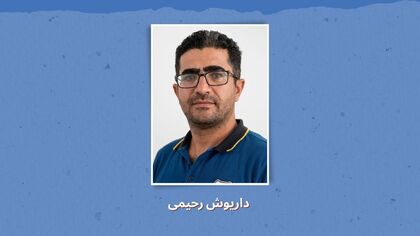
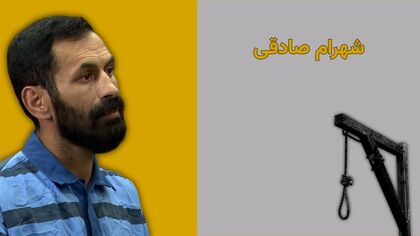
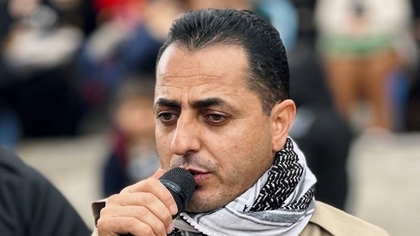
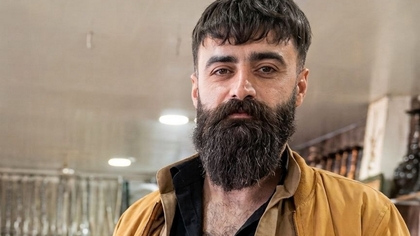
Urmia: From secret and extrajudicial executions to enforced disappearance of bodies and prevention of mourning ceremonies in Urmia for /Nasser Bakarzadeh and Mehrab Abdollahzadeh
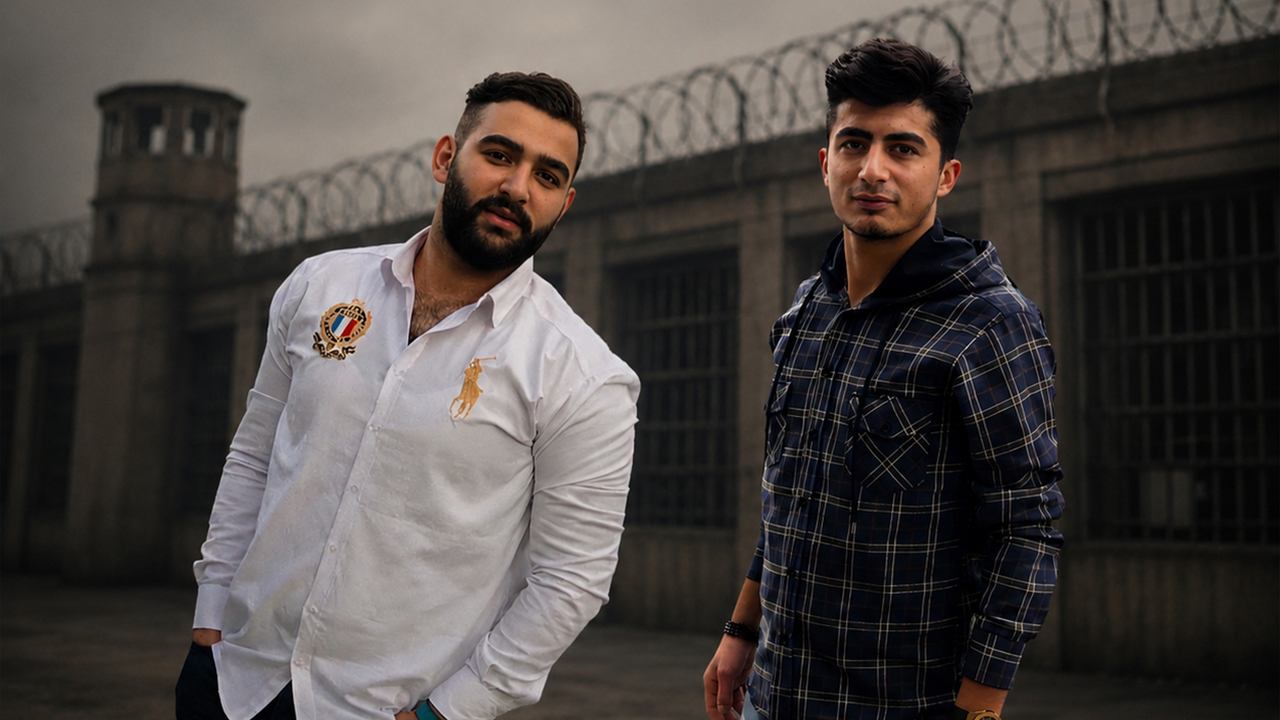
May 8, 2026; several days after the secret and unfair execution of "Nasser Bakarzadeh" and "Mehrab Abdollahzadeh," two Kurdish political prisoners, despite follow-ups by the families, their bodies have not been handed over to their families and they have been subjected to enforced disappearance. Additionally, security agencies prevented the holding of mourning ceremonies for these two executed young men in the city of Urmia, and the families were forced to hold funeral ceremonies in their ancestral villages.
An informed source, while confirming this information, told Kurdpa; following the execution, the families went to the Central Prison of Urmia, the place of detention of these two prisoners, to follow up on the delivery of their children's bodies, but prison officials told them that "no corpse will be handed over." Furthermore, after the execution of Nasser Bakarzadeh and Mehrab Abdollahzadeh on May 2 and 3, 2026, security agencies including the Intelligence Department summoned the families, threatened them, and prevented the holding of any funeral ceremony in the city of Urmia; as a result, the families were forced to hold the ceremonies in their ancestral villages.
This source says that after the execution of Nasser Bakarzadeh at 7:00 AM on May 2, security forces contacted his family and said; "We have executed your son and thrown away his corpse; go find it yourselves."
The funeral ceremony for Nasser Bakarzadeh was held in his ancestral village of "Gelaz" in the vicinity of Oshnavieh and the funeral ceremony for Mehrab Abdollahzadeh was held in his ancestral village of "Khoshalan" in the vicinity of Urmia in Azerbaijan-e Gharbi Province. This source says these ceremonies in the villages were held with an unprecedented presence of people.
Based on the obituary of Nasser Bakarzadeh, his memorial service was held on May 2 and 3 in the mosque of the village of "Gelaz" in Oshnavieh, and based on the obituary of Mehrab Abdollahzadeh, his memorial service was held on May 4 and 5 in the mosque of the village of "Khoshalan."
Secret execution without informing family and lawyers;
On April 29, 2026, Nasser Bakarzadeh was summoned to the prison's execution office for a meeting with one of the officials for the execution of sentences of the Public and Revolutionary Prosecutor's Office and was then taken out of the prison in a refrigerated vehicle and transferred to an unknown location.
Also on April 27, 2026, while political and ideological prisoners succeeded in meeting their families after three months, Mehrab Abdollahzadeh also had a meeting with his family, but following his protest against the "insult and disrespect" of one of the soldiers toward the families during the search, he was transferred to solitary confinement with handcuffs and shackles by the order of Peyman Khanzadeh, the head of the Central Prison of Urmia.
An informed source told Kurdpa: Both Nasser Bakarzadeh and Mehrab Abdollahzadeh had meetings with their families after three months, while political and ideological prisoners in Urmia Prison had been deprived of family meetings during this period. These meetings were not conducted under the title of "the last meeting before the execution of the sentence" and no information regarding a last meeting was given to the families and their lawyers.
Ultimately, the death sentences of these two Kurdish youths were carried out in an unknown location and their bodies have been subjected to enforced disappearance after the execution.
On the other hand, the publication of the forced confessions of Nasser Bakarzadeh and ambiguous videos lacking authenticity regarding Mehrab Abdollahzadeh after the execution of the sentences showed once again that the judicial system of the Islamic Republic, instead of relying on independent and verifiable evidence, is based on security scenarios, confessions under torture, and unproven narratives; a process in which requests for technical examination of evidence and principles of a fair trial were ignored and the death sentences were carried out in an atmosphere filled with ambiguity and serious legal doubts.
Broadcasting of Nasser Bakarzadeh's forced confessions after his execution;
After the execution of Nasser Bakarzadeh on the morning of May 2, 2026, the media of the Islamic Republic published a report including forced confessions taken from him and Yaghoub Karimpour, another political prisoner executed with him. In this report, they were accused of "espionage" and Nasser Bakarzadeh is sitting in front of the camera in an unknown location where a curtain is seen behind him, and at the beginning of his speech, it appears he is reading a text from a paper. He says in this video that he sent photos of some government centers, including a police station, through cyberspace. Also in these forced confessions, it is claimed that he was trying to photograph sensitive locations such as "Natanz" and "Parchin," but was arrested before succeeding.
These forced confessions have been published while based on reliable information received from Nasser Bakarzadeh's relatives outside Iran, after staying for several months in the Kurdistan Region of Iraq, he was trying to reach a European country via land routes to become a refugee, but due to the insistence of his family who opposed his going to Europe, he abandoned his decision and returned to Iran.
This is while Nasser Bakarzadeh had been arrested by security forces on August 9, 2023, before his trip to the Kurdistan Region of Iraq and was released with a commitment after a few weeks. The Kurdpa source says; for this reason, the charge of "espionage" against him is fundamentally baseless; because he had been arrested once before and if he knew he was under such a charge, he would never have returned to Iran to expose himself to re-arrest and the heavy charge of "espionage."
Broadcasting of ambiguous CCTV images after the execution of Mehrab Abdollahzadeh
After the execution of Mehrab Abdollahzadeh on the morning of May 2, 2026, the media of the Islamic Republic published a video titled "CCTV images of Mehrab Abdollahzadeh's crime scenes." This video was published without sound and without showing the time and date, which are usually present in CCTV images. In this video, a red circle is drawn on the movements of an individual and it is attempted to show that this individual is Mehrab Abdollahzadeh, but a large number of people are seen in the scene and it is not clear who the individual is on whom the red circle is drawn and who is striking a person on the ground. Also, it is not clear whether this video essentially relates to the "Woman, Life, Freedom" protests or belongs to another time. Despite the claim in this report that "these blows were inflicted on the body of Abbas Fatemieh," no sign of the authenticity of this video has been provided and even the name of the area or the place of the incident has not been mentioned.
This is while based on the previous exclusive report of Kurdpa and the documentation of the verdict, the case of Mehrab Abdollahzadeh was accompanied from the beginning by a lack of valid evidence, forced confessions, and reliance on "the judge's knowledge." Mehrab Abdollahzadeh was the second defendant in a case with about 60 defendants, not the main defendant of the case, but while many of the other defendants had been released or had left the country, he was sentenced to death as the only available defendant. According to informed sources, despite the repeated requests of Mehrab and his lawyers for a technical examination of the CCTV films, the location of the mobile phone, and the scientific matching of images, none of these requests were addressed and the judicial system, without providing definitive evidence and by relying on security narratives and confessions obtained under torture, created a "security frame-up" for him and issued and carried out the death sentence.
Nasser Bakarzadeh;
On the morning of Saturday, May 2, 2026, Nasser Bakarzadeh was secretly executed in an unknown location by the judicial system of the Islamic Republic of Iran on charges of "espionage for the benefit of Israel."
The death sentence of Nasser Bakarzadeh was upheld by the Supreme Court for the third time on April 25, 2026, and was notified to the Execution of Sentences Office of the Central Prison of Urmia on the same day; a sentence that had previously been overturned twice by the Supreme Court due to investigative defects and lack of attention to the reasons for innocence, but was upheld again this time amidst the atmosphere caused by the recent war.
On April 27, 2026, after the third upholding of the death sentence of Nasser Bakarzadeh, the Kurdish political prisoner held in the Central Prison of Urmia, by the Supreme Court, his parents released a video filled with concern and helplessness, calling for the halt of the sentence's execution. Emphasizing their son's innocence and his status as a tourist, they announced: "Nasser has committed no crime" and requested to "save Nasser and do not let him be executed."
On April 29, 2026, following the family's appeal after the upholding of the death sentence in the Supreme Court, Urmia Prison officials put him under pressure due to the publication of his parents' appeal video and then the transfer of Nasser Bakarzadeh to an unknown location took place. Simultaneously, "Amir Raeesian," one of the lawyers of this political prisoner, wrote on his X page: the death sentence of Nasser Bakarzadeh, which was upheld in the Supreme Court on April 19, 2026, and notified to the lawyers on April 25, was immediately met with a request for a retrial; however, at noon on April 29, 2026, Mr. Bakarzadeh was called by prison officials and after several hours did not return to the prison. He added that following a referral to the Sana system to learn about the case status, the lawyers' access to the case has been restricted and no information regarding a possible decision is available.
This prisoner had previously been sentenced to death in November 2024 by Branch One of the Revolutionary Court of Urmia on charges of "espionage for Israel." This sentence was overturned in April 2025 during the appeal stage by Branch 39 of the Supreme Court due to investigative defects and lack of attention to the reasons for innocence and was referred back to the court of equal standing for retrial.
Subsequently, he was once again sentenced to death by Branch Two of the Revolutionary Court of Urmia presided over by Judge Shahini, a sentence which was again overturned in November 2025 by Branch 39 of the Supreme Court due to file defects. However, in February 2026, the same charge was brought against him for the third time and a death sentence was issued, which was finally upheld by the Supreme Court on April 25, 2026.
Nasser Bakarzadeh, from the city of Urmia, was first arrested by security forces on August 9, 2023, and was released with a commitment after a few weeks, but was arrested again on January 2, 2024, and after interrogation at the IRGC Intelligence detention center, was transferred to the Central Prison of Urmia.
Mehrab Abdollahzadeh;
On the morning of Sunday, May 3, 2026, Mehrab Abdollahzadeh, a Kurdish political prisoner and one of the detainees of the Jin Jiyan Azadi revolutionary uprising, was secretly executed by the Islamic Republic in an unknown location.
On February 17, 2026; the request for a retrial for this Kurdish political prisoner was rejected by Branch 39 of the Supreme Court and despite the registration of a renewed retrial, Branch 39 of the Supreme Court refused to issue an order to halt the execution of the judgment.
On December 30, 2025; the death sentence of Mehrab Abdollahzadeh was temporarily halted and his case was referred back to the Supreme Court for re-examination. This sentence, which had previously been upheld in the Supreme Court on November 16, 2025, and after becoming final, had been referred to the criminal sentence execution unit of Urmia Prison for execution, is being re-examined in the Supreme Court following the protest of the case lawyers and the submission of a new protest bill.
On December 20, 2025, Kurdpa reported; Branch 9 of the Supreme Court upheld the death sentence of Mehrab Abdollahzadeh, who was held in the Central Prison of Urmia.
On December 24, 2025; following the upholding of his death sentence in the Supreme Court and the serious danger of the execution of their son's sentence, the family of Mehrab Abdollahzadeh released a video message requesting urgent help from human rights organizations and world officials and called for the halt of the death sentence's execution and the re-examination of the case in a fair and transparent judicial process; Mehrab's father, mother, and brother, while emphasizing his innocence and describing the difficult and critical conditions of the family, spoke of the oppressions and injustices inflicted upon him during detention and judicial proceedings and, referring to physical and mental tortures, the lack of valid evidence and documentation against him, and judicial pressures that led to obtaining forced confessions, emphasized the need for the immediate intervention of international organizations to prevent the execution of this unfair sentence; Mehrab's family clarified that their demand is not merely the halt of the death sentence, but rather they want a fair re-examination of the case based on real evidence.
On December 25, 2025, in an exclusive report, citing a conversation with one of Mehrab Abdollahzadeh's relatives, reliable field information, and a detailed examination of the judgment issued by Branch Nine of the Supreme Court as well as the documentation of the court of first instance, Kurdpa addressed the details of this case and announced that Mehrab Abdollahzadeh is under serious and imminent danger of the execution of the death sentence while a set of warning signs, including the sentence becoming final and enforceable in the Supreme Court, the referral of the case to the criminal sentence execution unit, and the blocking of his bank card, usually occur on the eve of the execution of a death sentence according to Iranian judicial procedure and have severely increased concerns about the life of this political prisoner; this is while based on these same examinations, his death sentence was issued and upheld after a completely unfair process, a process that extended from arbitrary detention and torture to obtaining forced confessions, deprivation of the right to access a lawyer, ignoring the defendant's defenses, indifference to requests for examination of technical evidence, and finally the issuance and stabilization of the judgment based on "the judge's knowledge," resulting in a verdict full of glaring contradictions; contradictions that were not only left unresolved but, instead of being interpreted in favor of the defendant's life, were used toward stabilizing the death sentence and have turned this case into a clear example of the systematic use of torture and security scenario-making in the judicial process, in such a way that confessions under torture replaced independent evidentiary grounds, the judge's personal opinion took the place of fact-finding, and a political prisoner as the only available defendant became a victim of a case in which dozens of its other defendants have never been prosecuted or held accountable.