Tehran; A narrative of Arman Marefati, a January protester in danger of execution, following the execution of 2 co-defendants: 9 days of lack of information, denying a lawyer, and 20 days of the response "We killed him with 3 bullets"
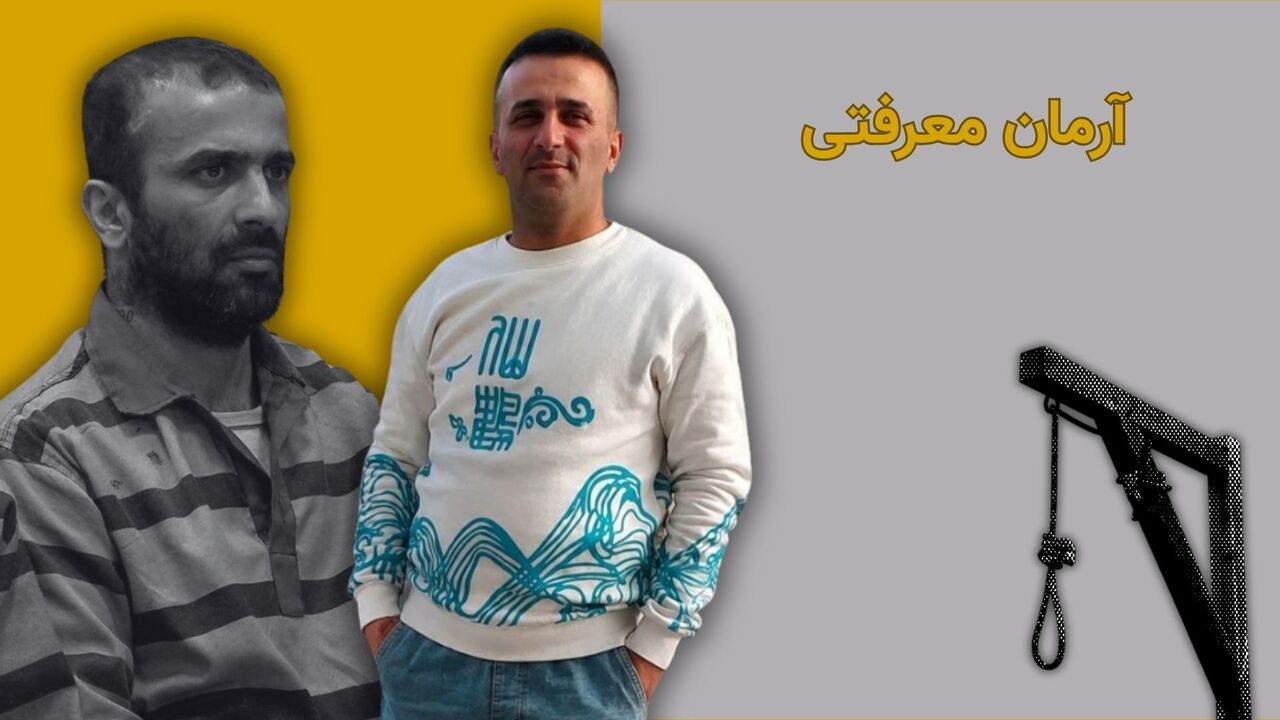
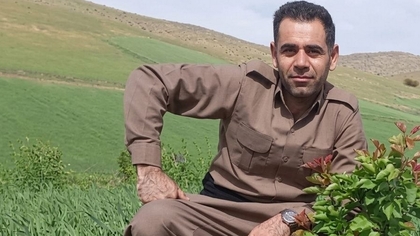
June 1, 2026; Arman Marefati, a 38-year-old Kurdish citizen from Saqqez, is in serious danger of execution after the execution of two of his co-defendants and while 9 days have passed since his transfer to Ghezel Hesar prison and the lack of information regarding his fate. His charges during the case proceedings have been altered to charges that entail the death penalty. According to his relatives, he has no one, and after his arrest, there was no information about his whereabouts for up to 20 days. Every time his mobile phone was called, a person behind the line would say with laughter: "We killed him, with 3 bullets." Also, until now, no chosen lawyer has been allowed to enter his case. This report has been compiled in a conversation with an informed source about the situation of Arman Marefati, a political prisoner sentenced to death in connection with the January 2026 protests, to recount part of the narrative of the unfair judicial process and the issuance of hasty death sentences for the detainees of the January 2026 public protests.
Arman is helpless and innocent;
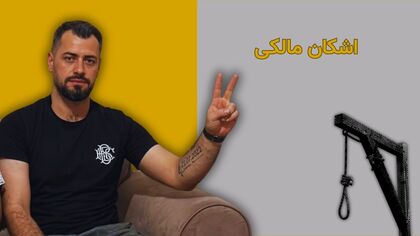
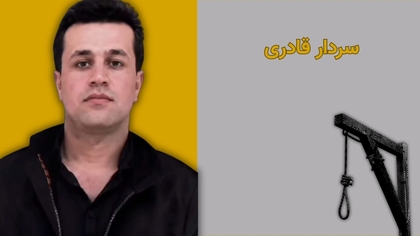
This informed source begins his words like this: "By God, Arman did nothing and is innocent." He says: "Arman is very helpless; he has no father, no mother, and no sister or brother. He has two small children whose only wish now is just to hear his children's voices." For a few years, Arman had been working as a laborer in one of the fruit and vegetable markets in Tehran. On February 21, 2026, Mizan News Agency, by publishing images of "Ashkan Maleki", "Mehrdad Mohammadinia", and "Arman Marefati" in the Revolutionary Court, reported on the handling of the case of the arson at the Jafari Mosque and the Imam Hadi Seminary in Tehran. In this case, Ashkan Maleki and Mehrdad Mohammadinia were sentenced to death, and the charge of Arman Marefati was also altered from "assembly and collusion against national security" to "participation in operational actions for the benefit of Israel and America and destroying and setting fire to religious places and public property."
The serious danger of the execution of Arman Marefati after the execution of two co-defendants and 9 days of lack of information on his fate;
On the morning of Monday, June 1, 2026, Mizan News Agency reported the execution of Ashkan Maleki and Mehrdad Mohammadinia, without mentioning the location of the execution of the sentence. These two political prisoners were executed secretly and were deprived of prior notification to the family and the right to a final meeting. Now Arman Marefati, the third defendant in this case, is in danger of the imminent execution of the death sentence. The informed source of Kurdpa says that a few days prior to the transfer of Arman Marefati from the Greater Tehran Prison to Ghezel Hesar Prison, it was verbally announced to his relatives that the case had been sent to the Supreme Court for review; however, his family and relatives do not know whether this matter is true or not, and according to themselves "nothing is clear". This same source says that Arman Marefati was transferred from the Greater Tehran Prison to Ghezel Hesar Prison on May 24, 2026, and since then he has had no contact with his relatives, and no information is available regarding his situation.
"For the first 20 days when we called, they would say with laughter: We killed him, with 3 bullets";
This informed source further says: "When he was arrested, for up to 20 days none of his relatives had any information about him. We turned everywhere upside down, but no one gave an answer and they did not even know that he had been arrested. Anyone who called his mobile phone, a person behind the line would say with laughter: 'We killed him, with 3 bullets.'" He adds: "After about 20 days, he himself called for the first time and said I have been arrested. Following that, he would make a short call every once in a while." According to this source, Arman never speaks about torture, and whenever he is asked about it, he changes the subject. He says: "No one knows what happened to him during those days. He only says I brought a trash can to the street and that was all I did."
Every chosen lawyer who goes after the case is barred from entering it;
This informed source says that so far conversations have been held with more than 10 lawyers to accept the representation of Arman Marefati, but none have been allowed to enter the case. According to him, in all referrals and follow-ups for the entry of a chosen lawyer into the case, only one answer has been given: "He has a lawyer himself". According to this source, Arman Marefati has a public defender whom the relevant institutions themselves have appointed for him.
The confusion of relatives between the promise of referring the case to the Supreme Court and the danger of execution of the sentence;
Kurdpa's informed source says that a few days prior to the transfer of Arman Marefati to Ghezel Hesar Prison, his family was told that the case had been sent to the Supreme Court, but his relatives still do not know whether this matter is a reality or a lie and say "nothing is clear". He adds that even the public defender of the case does not provide a clear explanation and Arman's relatives have no information about the process of following up on the case. The only issue that the public defender brought up a few days before his transfer to Ghezel Hesar was this same referral of the case to the Supreme Court; a matter about which the family still has doubts regarding its accuracy.
Arman Marefati;
Arman Marefati, son of Mohammad Saleh, is a 38-year-old Kurdish citizen from Saqqez who in recent years worked as a laborer in the fruit and vegetable market of Tehran to provide a livelihood. The home of his family was located at the Saqqez Intersection, and his family owned an egg shop. A few years ago, he lost his father, mother, and sister due to gas poisoning. Currently, none of his immediate relatives are alive and he is practically left alone. Arman has two young children and currently has a fiancée.
The case of "Ashkan Maleki", "Mehrdad Mohammadinia", and "Arman Marefati";
Ashkan Maleki, a Kurdish citizen from Qorveh and a resident of Tehran, and Mehrdad Mohammadinia and Arman Marefati, two Kurdish citizens from Saqqez and residents of Tehran, were arbitrarily arrested by security forces during the public protests of January 9, 2026, in Tehran and transferred to an unknown location. On June 1, 2026, Mizan News Agency reported the execution of Ashkan Maleki and Mehrdad Mohammadinia without mentioning the location of the execution of the sentence. These two political prisoners were executed secretly and without prior notification to their families and without enjoying the right to a final meeting. Informed sources say that their death sentences were executed in Ghezel Hesar Prison.
These two protesters were accused of "setting fire to the Jafari Mosque and the Imam Hadi Seminary in Tehran." Government media published parts of their court session on February 21, 2026. The name of the judge of the case was not announced, but it is suspected that the presidency of the court was held by Abolqasem Salavati, known as the "Execution Judge." During the court, these protesters confessed to causing damage through arson; an accusation which, based on the international commitments of the Islamic Republic, does not fall within the category of "the most serious crimes." An expert estimated the amount of damage caused to be around 50 billion Tomans and had said: "If the main structure of the mosque and the seminary requires complete demolition and reconstruction, its cost will be around 150 billion Tomans."
Nevertheless, invoking Article 1 of the "Law on Intensifying the Punishment for Espionage and Cooperation with the Zionist Regime and Hostile Countries Against National Security and Interests", the court sentenced Ashkan Maleki and Mehrdad Mohammadinia to death and the confiscation of property. In the issued verdict, it was stated that they were sentenced to death and the confiscation of property on the charge of "participation in operational actions contrary to the security of the country for the Zionist regime and the hostile government of America and hostile groups and factors dependent on them, which resulted in fear, panic, and making society insecure, and entering religious and sacred places with the intent to destroy and set fire to government and private properties, including a mosque and a seminary, with the intent to confront the sacred system of the Islamic Republic of Iran during war and security situations."
During the case proceedings, the charge of Arman Marefati, the third defendant in this case, was altered from "assembly and collusion to commit a crime against internal national security through presence in the January 2026 riots" to "participation in operational actions contrary to the security of the country for the Zionist regime and America and hostile groups and factors dependent on them, and entering sacred religious places with the intent to destroy and set fire to government, public, and private properties." Arman Marefati said in court that he had moved a few trash cans from another part of the street to the front of the mosque. In response to the judge's question about the reason for setting fire to the mosque, he stated: "I did not set fire to the mosque. I only brought two trash cans and did absolutely nothing else."
Since March 19; the execution of one protester every 4.5 days; With the execution of Mehrdad Mohammadinia and Ashkan Maleki, so far seventeen of the protesters arrested in connection with the protests of January last year have been executed. Since March 19, 2026, at least 17 protesters have been executed in connection with the January nationwide protests; in other words, approximately every 4.5 days one protester has been executed.