Nationwide and Unprecedented Strikes in Kurdistan; In Embrace of Ilam, Kermanshah, and Lorestan, and the Rightfulness of Protests
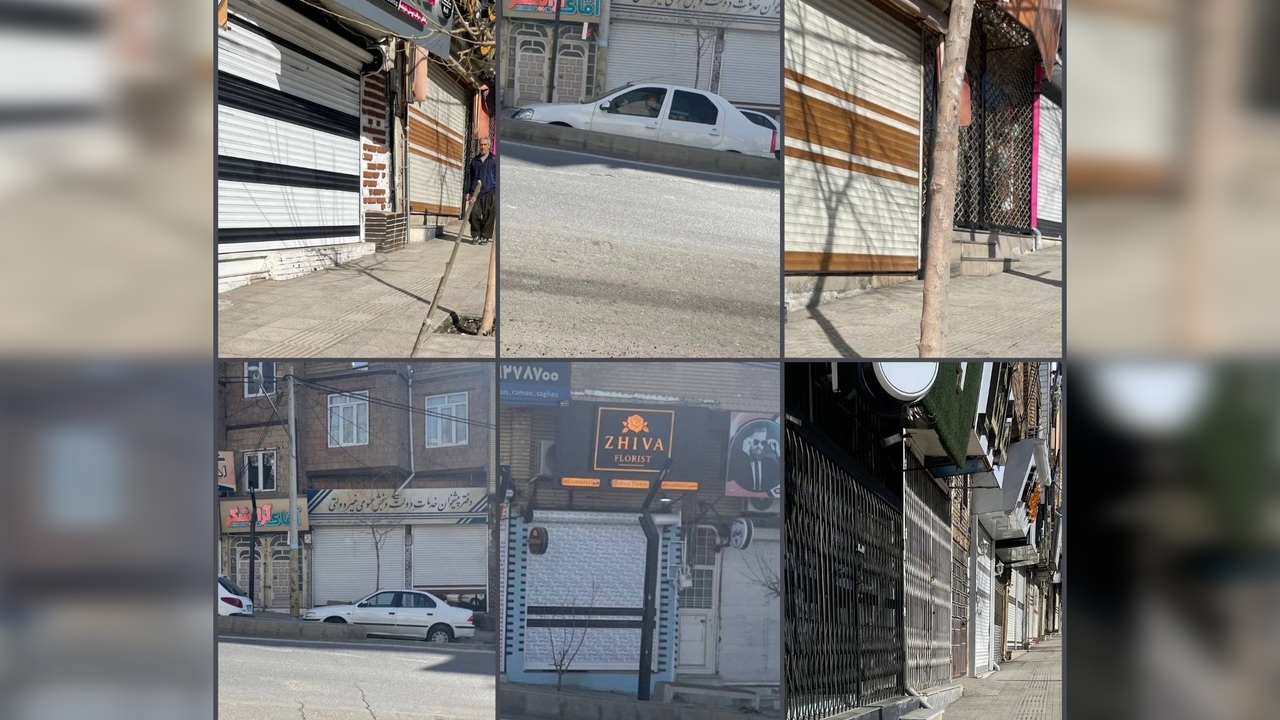
January 10, 2026; Following a call for a general strike by 7 Kurdish parties, on Thursday, January 8, 2026, a nationwide and unprecedented strike was initiated by shopkeepers and bazaar merchants in Kurdistan. This strike was conducted in support of the popular protests and in protest against the bloody crackdown on people, particularly in Ilam, Kermanshah, Malekshahi, and Lorestan, and all of Kurdistan was in strike in a coordinated and unified manner.
In this report, based on videos and information received from the day of the strike as well as images published by credible sources, Kurdpa takes a statistical-qualitative look at these unprecedented strikes, the generalities of which are as follows:
Generally, all cities of Kurdistan and even villages were in strike.
The rate of strikes was reported between 90% and 100%.
In provincial centers and large cities, the strike rate was near 100%.
Videos from more than 40 cities in Kurdistan reached Kurdpa extensively; dozens of videos were sent from each city, showing the extent of the protests.
Images showed the cities were very deserted, indicating the strength of the strikes and the people staying in their homes.
Amidst the widespread strikes, only government shops or those affiliated with the government remained open.
This was while:
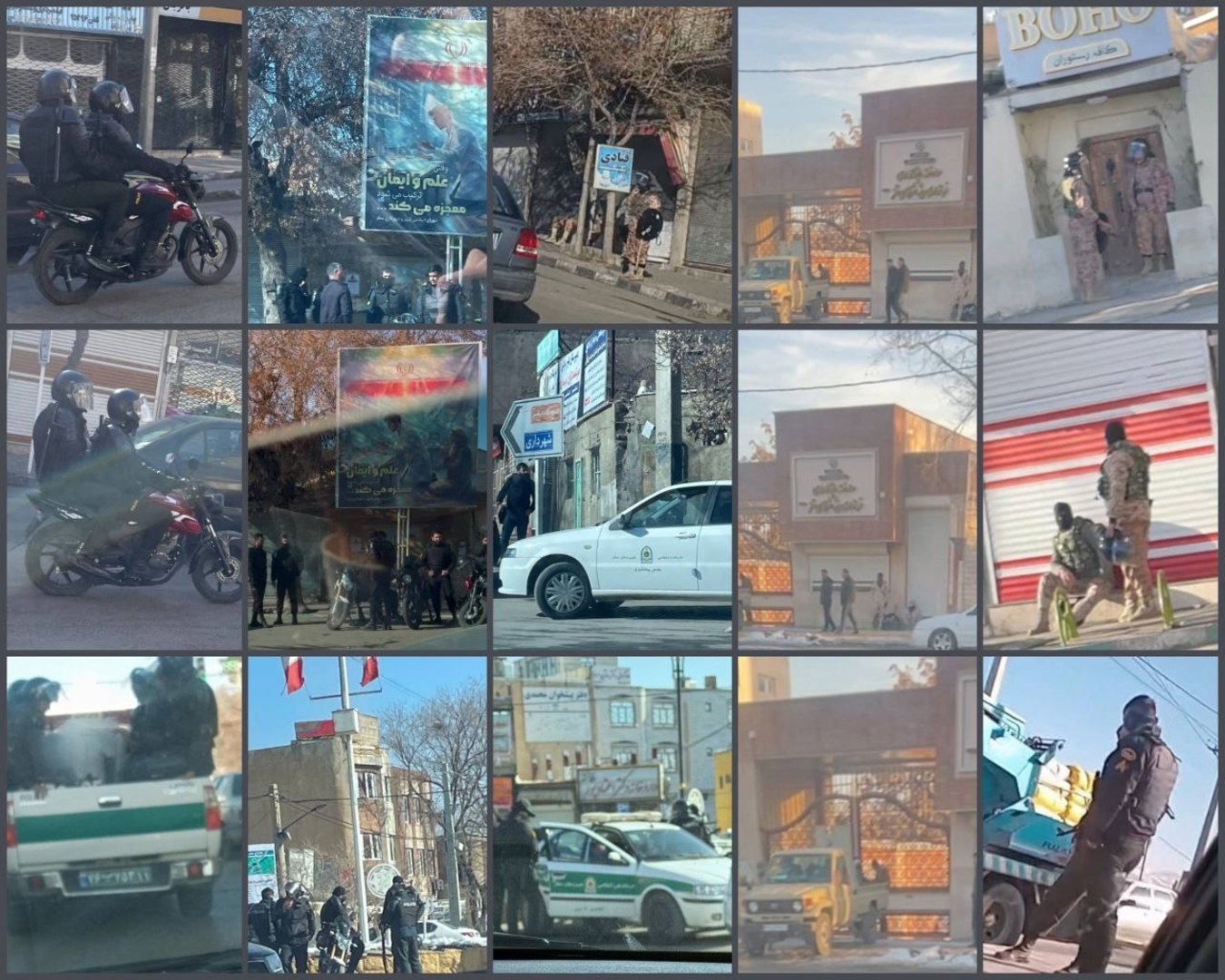
For days prior, the atmosphere of the cities had been severely militarized with the deployment of various military and security forces.
On the day of the strike, the level of militarization in the cities increased several times over.
Widespread threats against shopkeepers continued in various forms and with intensity.
The strike statistics of cities, based on images that reached Kurdpa, broken down by province, were as follows:
Kurdistan Province: Sanandaj, Saqqez, Mariwan, Baneh, Kamyaran, Qorveh, Dehgolan, Divandarreh, Saheb, Bijar, and the large village of "Ney."
Kermanshah Province: Kermanshah, Eslamabad-e Gharb, Paveh, Ravansar, Sarpol-e Zahab, Gilangharb, Qasreshirin, Sonqor, Kuzaran, Salas-e Babajani, Gahvareh (Dalahoo).
West Azerbaijan Province: Urmia, Bukan, Oshnavieh, Piranshahr, Sardasht, Naghadeh, Qotur, Tekab, Shahindezh, Rabt, Mahabad, Pasveh, Gug-Tappeh.
Ilam Province: Ilam, Sarableh, Sirvan, Abdanan, Malekshahi, Asemanabad.
According to information received by Kurdpa, the main cities and especially the provincial centers witnessed complete strikes:
Bukan: Near 100% strike, such that even all pharmacies were closed.
Kamyaran: Near 100% in strike and all passages and shops were closed. Even fruit sellers around the street and street vendors tied their goods with rope and struck, and some people closed their shops and sat in front of them.
Saqqez: Near 100% strike.
Sanandaj: Near 100% strike. One of the humorous quotes from a Sanandaj citizen that was widely circulated was: “Not even one cigarette kiosk is open, I’m going crazy for a single cigarette. You are very heartless for even closing the kiosk; open up, we want cigarettes.”
Mahabad: Near 100% strike.
Kermanshah: Near 100% strike. Kermanshah was practically closed and all neighborhoods and districts were shut down.
Urmia: Near 100% strike, especially all areas where Kurdish citizens reside, including the Dizaj Mergavar bazaar.
Gilangharb and Qasreshirin: Near 100% strike; a city like Qasreshirin, which had not participated in strikes in previous years, was completely closed this time.
Security-Military Atmosphere and All-out Threats to Contain Strikes and Fear of Protests:
Intensification of the deployment of military forces (Islamic Revolutionary Guard Corps, Law Enforcement, Special Units) at the city level.
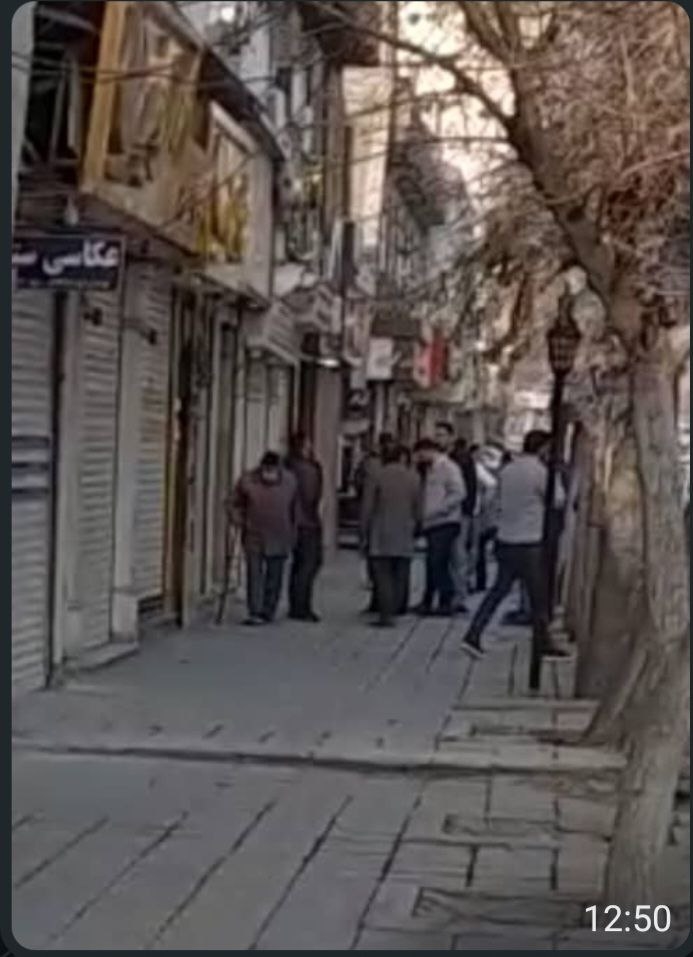
Extensive presence of security forces (Plainclothes, proxies, and armed local "Jash") at the city level.
Patrolling of military drones and helicopters to create terror.
Blocking and controlling main routes and city intersections.
Deployment of replacement repressive forces in government locations.
Repressive forces using government and undercover vehicles for movement.
Widespread threats via telephone, in person, judicial threats, and sealing of shops to force shopkeepers to open.
Cases of direct violence including shooting and repressive detention of people.
Efforts by service institutions to draw people out of their homes.
Difficulty in recording images due to the intensity of the security atmosphere.
The description of which, based on the details of cases that reached Kurdpa, is as follows:
Mahabad, Oshnavieh, Naghadeh, Rabt, Sardasht, and Piranshahr: The atmosphere of the cities was reported as severely militarized. The city chambers of commerce and security institutions, despite applying intense pressure and threatening bazaar merchants and cultural and political activists through telephone calls, were unable to prevent the formation of the strike. On the other hand, some offices, including banks, Welfare Organization, Emam Khomeini Relief Foundation, and other institutions related to people's daily affairs, contacted citizens under various pretexts and invited them to visit in person to make the city atmosphere look busy and provide the ground for reopening the bazaars. The intensity of security force deployment and the security-military atmosphere was such that in some cases people were unable to film the city situation.
Bukan: From the early hours of the morning, security forces contacted shopkeepers and threatened them to reopen shops, stating they would face judicial action in case of defiance. However, shopkeepers ignored these threats. Subsequently, in some cases, plainclothes security forces used violence and coercion to take some shopkeepers in front of their shops and forced them to open the doors, but immediately after the forces left, the shops were closed again. Also, plainclothes forces were extensively present in the streets and prevented people from filming the strike. To create terror, drones were also patrolling in the city sky. On the other hand, repressive forces were deployed in locations including the girls' boarding school and the Governor’s office courtyard. In addition, local armed forces known as "Jash" were scattered at the city level, in front of government offices and at every alley entrance.
Saqqez: It was reported that security forces were deployed to the same extent as people present in the street, while few people were in the street and no shop was open. Also, repressive forces used tinted-window ambulances for patrolling and used vehicles belonging to the Gas and Electricity Departments for moving repressive forces to different parts of the city. These images published by Kurdpa clearly show the deployment and patrolling of repressive forces.
Mariwan: Reports indicate that police and Law Enforcement forces were deployed at most intersections and had blocked them. Also, proxy and non-Iranian repressive forces entered Mariwan and were deployed in front of the city's Radio and Television station. Inside the city, military and plainclothes forces were present in every neighborhood and street to control the situation.
Urmia: It was reported that Intelligence Department security forces contacted shopkeepers and threatened them with the sealing of their shops, but most bazaar merchants continued the strike.
Oshnavieh: According to reports, with pressure from security institutions and the presence of military forces in the streets and shop inspections, some shopkeepers were forced to open their shops for a few hours but immediately returned to the strike.
Shahindezh: Despite the intense security atmosphere and the widespread deployment and patrolling of repressive and security forces, the people of this city participated in the strike in an unprecedented manner.
Naghadeh: In Naghadeh, more than 70 percent of Kurdish citizens participated in the strike, which reached 90 percent in the afternoon hours. This increase occurred after Law Enforcement and security forces opened some shops by force and threat, but after the forces left, the strike began again from around 1:00 PM. Also, plainclothes security forces stood in front of some shops and threatened people via telephone calls.
Sanandaj: It was reported that on the path to Abidar Mountain, about 50 Islamic Revolutionary Guard Corps forces were deployed with military weapons.
Qasreshirin: Simultaneously with the nationwide strikes of the people of Kurdistan and the first anniversary of the government killing of a youth named “Mohammad Azizi,” who lost his life by military gunfire in the “Parvizkhan” border market, his family appeared at his grave. After the appearance of the family and relatives, repressive forces, fearing the start of popular protests, attacked them and tried to disperse the crowd by firing gunshots. However, the present crowd—a large part of which consisted of women—reacted to this repression by chanting the slogans “Death to the Dictator,” “Death to Khamenei,” and “This government and its guardianship are void.” In published videos, images of elderly women and a large number of repressive forces and Special Units are seen attacking the people while shooting.
Kermanshah: In the continuation of the nationwide and widespread popular strike in all cities of Kurdistan, images reaching Kurdpa indicate violent detentions accompanied by beatings and continuous gunfire at a number of citizens who appeared in the streets.
Flight of Military Helicopters: In various cities including Sanandaj, Saqqez, Baneh, and Tekab, reports of military helicopters flying over the cities have reached Kurdpa.
Symbolic Support for the Strikes:
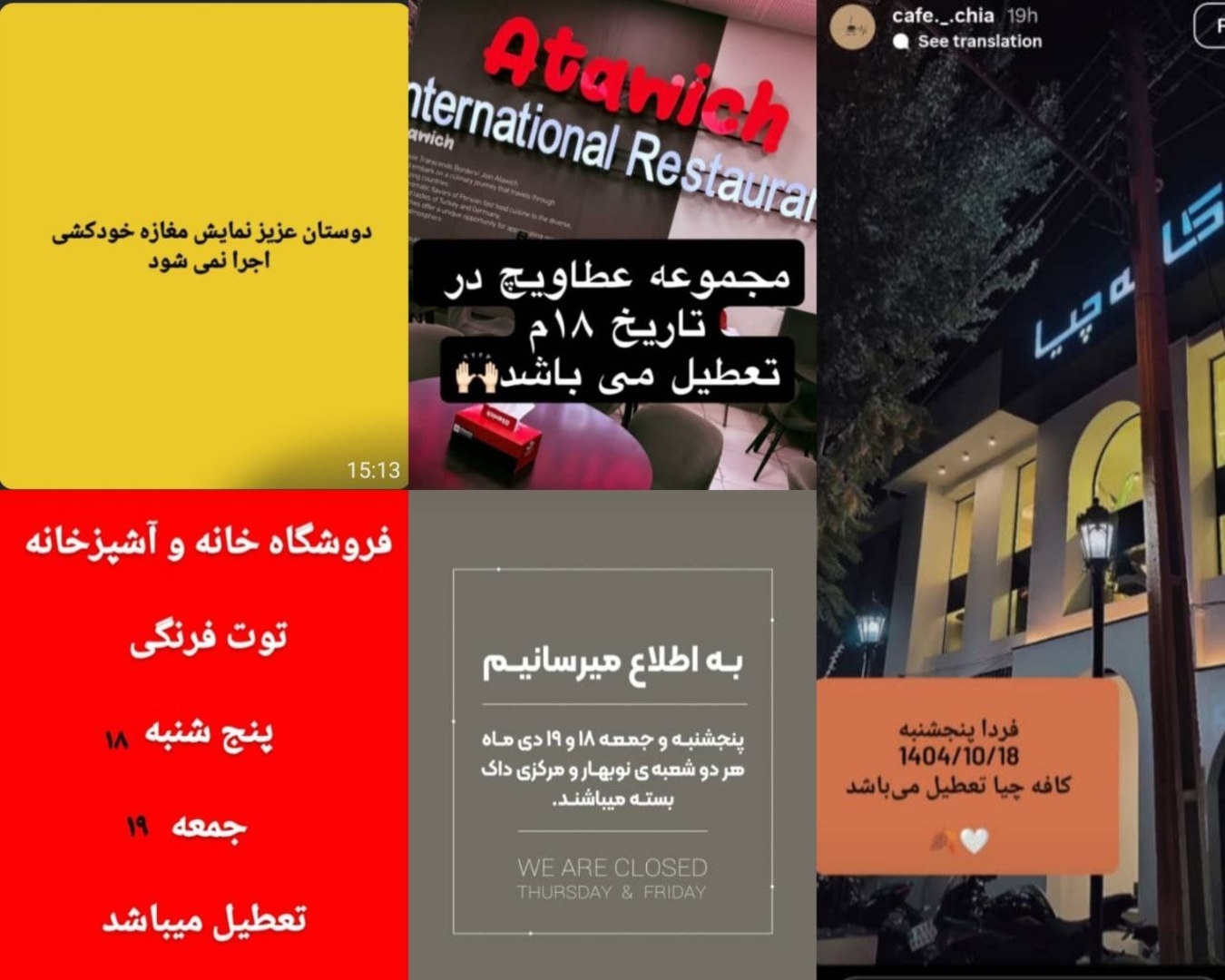
In unity for the strike, some cafes and shops had symbolically informed from the day before that they would be closed on January 8:
A theater performance was scheduled to be held on that day at "Bahman" Cinema in Sanandaj, but it was canceled by the actors and cinema management to support the strikes. They announced on Instagram: “Dear friends, the play ‘Suicide Shop’ will not be performed.”
Other locations including “Atawich Collection,” “Strawberry Home and Kitchen Store,” “Chia Cafe,” and “Nobahar and Duck Branch Fast Food” also announced from the day before that they would be closed on January 8.
Internet Shutdown:
From the afternoon of January 8, the strikes in Ilam, Kermanshah, Sanandaj, Mariwan, Kamyaran, Dehgolan, Qorveh, and Bijar entered the phase of protests. The nationwide and deep shutdown of the internet, disruption in electricity, the banking system, and even calls and text messages disrupted the communication process. It is said that internet traffic had significantly decreased from 1:00 PM. Subsequently, and with the start of wider protests in the early evening hours, reports indicated that on the evening of Thursday, January 8, 2026, at 7:00 PM Iran time, the internet for Hamrah-e Aval and Irancell SIM cards was cut off, and from 8:30 PM Iran time, the internet was completely shut down. This outage has continued for more than two nights, and the situation inside is reported with difficulty and very little; however, reports indicate extensive deployment of repressive and security forces and widespread detentions in Kurdistan, especially in Ilam and Kermanshah.
Successful Experience of Strikes in Kurdistan:
In past years, especially during the Jin, Jiyan, Azadi protests, Kurdistan has had several successful strike experiences, showing the power of organization and the effectiveness of the calls from Kurdish parties. Bazaar merchants, shopkeepers, and cultural activists, with the accompaniment of the people and coordination of the parties, have gone on strike and practically brought many cities and villages into closure and complete silence. This successful background caused recent calls from parties for a nationwide strike on January 8, 2026, to be answered with high trust and hope, providing the ground for an unprecedented and coordinated strike in all of Kurdistan.
Images of the military and repressive atmosphere over Kurdistan;
Images of the presence of security and plainclothes forces in the street;
Images of symbolic support for the strike;
Drafted by; Awin Mostafazadeh