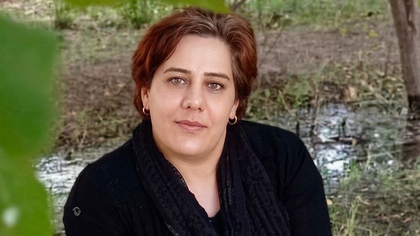
Seyyed Nasreddin Heidari; The People's Protest is Rightful, and Any Violence is Condemned
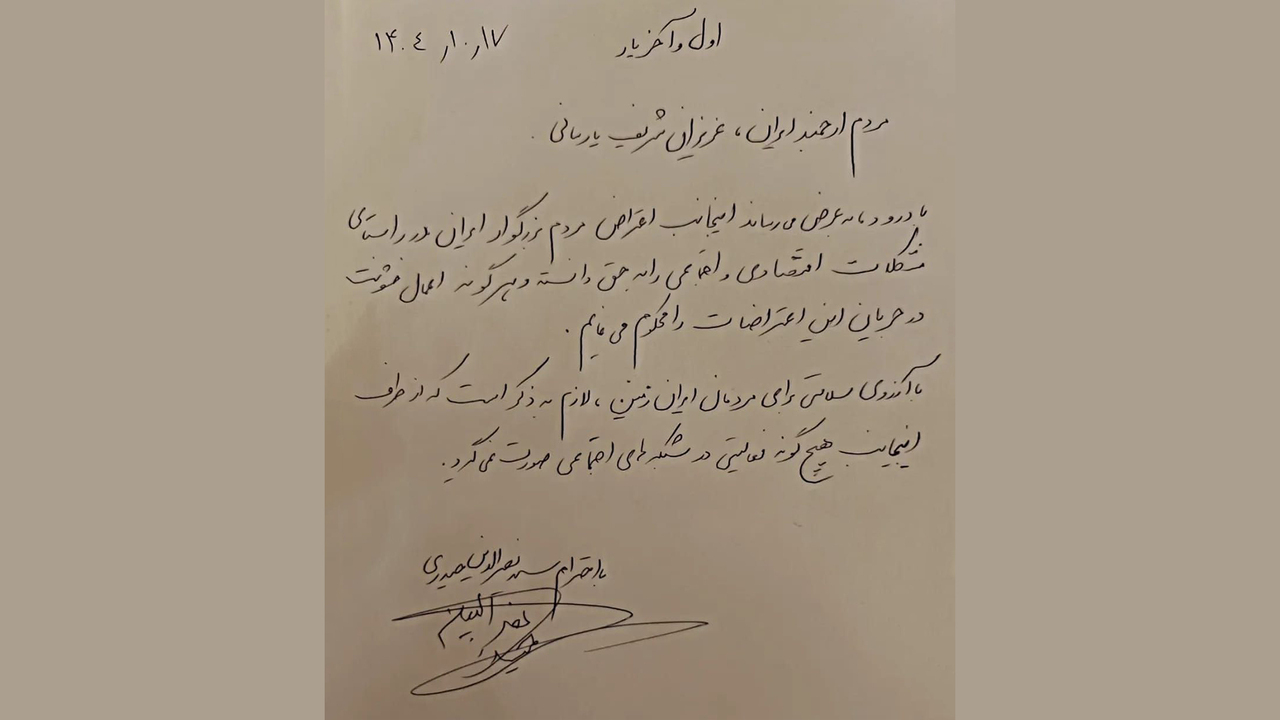
January 7, 2026; Following the recent nationwide protests and the violent crackdown on protesters, the spiritual leader of the Yarsan, “Seyyed Nasreddin Heidari,” has issued a handwritten letter characterizing the protests of the Iranian people in response to economic and social problems as “rightful” and condemning any use of violence during these protests.
In this letter, written on the date of January 7, 2026, it is stated:
“I consider the protest of the honorable people of Iran regarding economic and social problems to be rightful and I condemn any use of violence during these protests. Wishing health for the people of the land of Iran, it is worth mentioning that no activity is carried out on social networks on my behalf. With respect, Seyyed Nasreddin Heidari”
Regarding the Authenticity and Tradition of the Yarsan Spiritual Leaders' Letters;
According to the prevailing tradition in the Yarsan faith, the spiritual leaders—and currently “Seyyed Nasreddin Heidari” as the spiritual leader of the Yarsan—publish all their positions, demands, and views exclusively in their own personal handwriting. This method is considered a part of the tradition and spiritual credibility within the Yarsan community. “Wishing health for the people of the land of Iran, it is worth mentioning that no activity is carried out on my behalf in social networks. With respect, Seyyed Nasreddin Heidari.”
Yarsan;
Yarsan (also known as “Ahl-e Haqq”) is an ancient religious-cultural community with deep roots in the regions of Kurdistan, especially Kermanshah, Ilam, and other parts. Yarsan beliefs are based on oral traditions, specific rituals, and special respect for the Pirs and spiritual leaders. The principle of “Awal wa Akhar Yar” expresses the centrality of the “Yar” (human, truth, and spiritual bond) in the worldview of this faith.
Followers of the Yarsan faith address their spiritual leaders as “Pir-e Bozorg” and accord a spiritual and authority-based status to the Pir-e Bozorg.
Despite the historical antiquity of the Yarsan, the Islamic Republic of Iran does not recognize this faith as an official religion. Over the past four decades, the Yarsan have faced systematic discrimination, deprivation of religious rights, restrictions in employment, security pressures, and the denial of religious identity. The lack of recognition of their rights in the Constitution and the security-oriented view toward the Yarsan community have placed this group among the marginalized religious minorities under systematic discrimination in Iran.