Sanandaj; Transfer of Political Prisoners to the Central Prison and Restrictions on Furlough and Release, Evacuation of Parts of Hospitals, And Deployment and Movement of Military Forces in Public Places
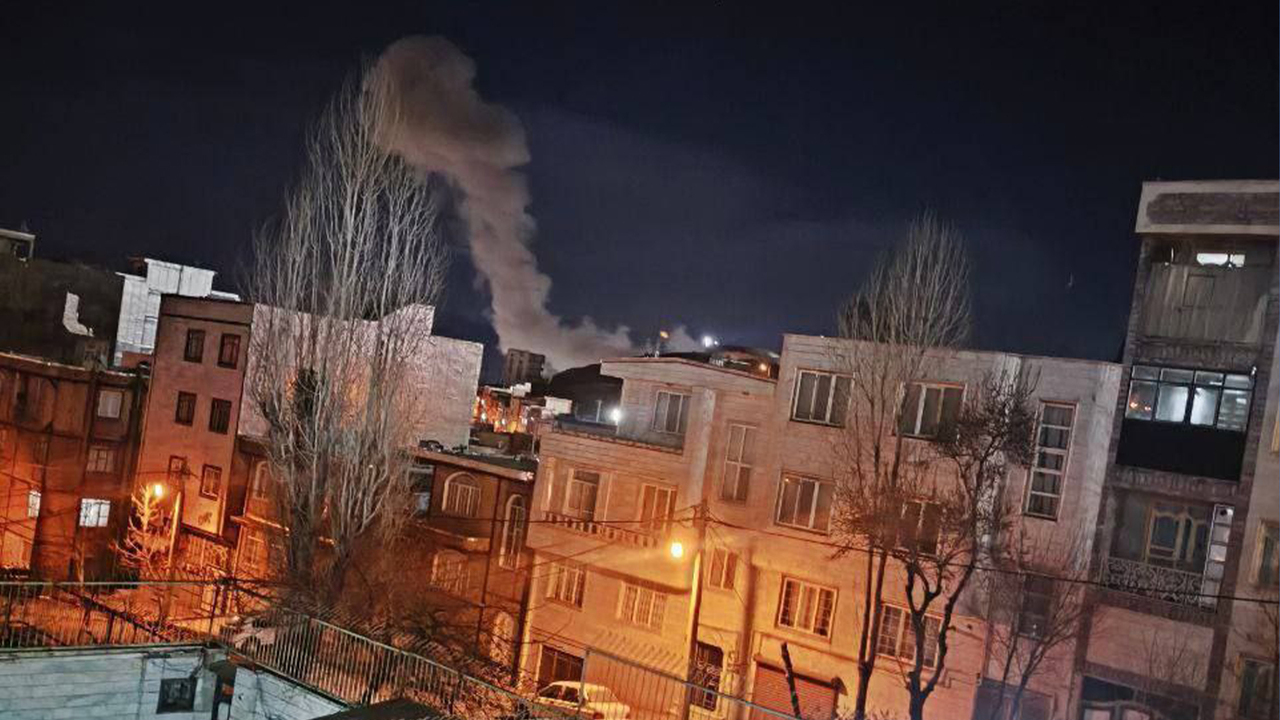
March 10, 2026; Concurrent with the start of military conflicts in the city of Sanandaj, received reports indicate the transfer of political detainees from the detention centers of the Intelligence Department and the Intelligence Organization of the IRGC, including the “Shahramfar” detention center, to the Sanandaj Central Prison; a transfer that, given the current conditions and the lack of transparent information, has raised concerns about their status and fate. Simultaneously, reports indicate restrictions on granting furlough or temporary release to a portion of political prisoners, the evacuation and closure of parts of “Tohid” and “Besat” hospitals, and the deployment of military forces in parts of “Kowsar” hospital. Alongside these cases, extensive deployment and movement of military forces and equipment in schools, sports halls, administrative buildings, and public places of the city have also been reported; a situation that, along with the targeting of some military and government centers, has increased concerns about the security of civilian citizens.
Prisons and Detention Centers of Sanandaj;
Based on information obtained by Kurdpa, from the very early days of the military attacks, the detention centers of the Intelligence Department and the Intelligence Organization of the IRGC, including the “Shahramfar” detention center where political detainees are held, have been moved to the Sanandaj Prison.
Regarding the status of the release or furlough of political prisoners, it has been reported that generally, a number of political prisoners who had less than five years of enforceable imprisonment sentences have gone on furlough temporarily by posting bail. In contrast, political prisoners with more than five years of enforceable imprisonment sentences, including “Idris Manbari” and “Soma Pourmohammadi,” have been deprived of the right to temporary release or furlough, even despite the possibility of posting bail, and continue to be held in prison.
Among the political prisoners held in Sanandaj Prison who face a death sentence is “Yousef Ahmadi.” According to sources, he is deprived of any right to release or furlough due to the case related to execution.
It is worth noting that Sanandaj Central Prison is among the government institutions that have not been targeted by missile attacks. According to an informed source, in previous periods as well, when Sanandaj Central Prison faces overcrowding due to an increase in the prisoner population, usually individuals with shorter sentences are sent on furlough or benefit from conditional release and other legal mechanisms to reduce the duration of imprisonment.
Kurdpa acknowledges that the lack of transparent information and the dissemination of scattered and incomplete information about the status of prisoners has created serious concerns about their fate—especially political prisoners; prisoners who previously faced unfair trial processes, security case-building, and convictions under pressure and torture. This situation has also made accurate documentation regarding the conditions of detention and the physical status of political prisoners difficult and can be considered an instance of human rights violation and the endangerment of the lives of civilian citizens.
Hospitals of Sanandaj;
In another part of the city's developments, reports indicate extensive changes in some medical centers. During the past few days, the forces of the Islamic Revolutionary Guard Corps (IRGC) have forced the officials of “Tohid” and “Besat” hospitals in the city of Sanandaj to evacuate some sections of these two hospitals and discharge the patients hospitalized in these sections.
According to these reports, except for the Cardiology, ICU, Emergency, CCU, and Oncology departments, other sections of these hospitals have been closed and evacuated, and part of the medical staff has been transferred to the “Social Security” and “Kowsar” hospitals.
Among the sections in “Besat” hospital that were forcibly evacuated was the obstetrics and gynecology section, which was moved to other locations, and this section has been placed at the disposal of the medical staff of the “Social Security” hospital.
An informed source, while confirming this news, told Kurdpa that in the past days, IRGC forces evacuated the upper floors of “Kowsar” hospital and deployed military forces there.
Kurdpa emphasizes that despite reports regarding the deployment of military forces in Sanandaj hospitals, no official or transparent information has been provided to citizens regarding the status of these medical centers so far. Consequently, there is a possibility that patients may still visit these centers to receive medical services, or medical staff, surgeons, and hospital employees may be forced to commute to them, and it is even possible that patients are still present in these centers.
Such a situation can endanger the lives of civilians; because based on international humanitarian law principles, medical centers and medical staff must enjoy special protection during armed conflicts, and military use of these centers can put the lives of patients and staff at risk.
Deployment and Movement of Military Forces and Equipment in Various Locations;
Received reports also show that since the start of the military conflict, the institutions and military forces of the Islamic Republic have been deployed in many public places of the city and are constantly on the move. These deployments have included sports halls, schools, government offices, and even some residential areas.
In the sports venues sector, the deployment of forces in the Takhti sports hall in the “Feizabad” neighborhood, the “Shalman” gymnastics house, and the sports hall of the “Besat” township has been reported.
In the field of educational and service centers, the “Imam Sajjad” school near the Sanandaj Central Prison, the buildings of the Red Crescent Society of the Islamic Republic of Iran, and the assembly hall of the General Directorate of Education on “Ekbatan” Street are among the locations where military forces have been deployed.
In the administrative institutions sector, the Agriculture Jihad building at the “Jihad” three-way intersection and the Justice Complex have been placed entirely at the disposal of security forces and are reported to be full of agents. Also, the Housing Department, the Sanandaj Municipality, and a girls' dormitory in the “Feizabad” area are other locations where the presence of security forces has been reported.
In the first days of the military conflict, the military forces of the Islamic Republic were also moving with military vehicles in the range of Mount Abidar or had set up tents on various routes.
Also, during the past days, reports have been published regarding the deployment of military forces in mosques and schools in suburban and lower-tier areas of the city of Sanandaj, including the “Taftan,” “Sheikhan,” “Abbasabad,” and “Kani Kuzaleh” areas.
On March 8, 2026, Kurdpa also received information stating that in front of the wall of the Sanandaj Airport, in the range above the gas station, the special park for Rahian-e Noor and Basij, a large number of military and intelligence forces were observed by citizens.
Also, in the Jihad three-way area and the range of the Sanandaj Justice Department, the situation is reported to be so critical that many citizens have proceeded to evacuate residential homes adjacent to these buildings due to concern for their lives and their families. The deployment of military equipment in these crowded urban points can increase the probability of these areas becoming military targets and threaten the lives of local residents.
Attacks on Military and Government Centers;
At the same time, it has been reported that in the city of Sanandaj, all military bases and outposts and many government organs have been targeted. These centers include the Court, the Intelligence Department, the Rahian-e Noor center, Basij resistance bases, the Sanandaj Border Guard Command Center, the Imam Ali Garrison, Police Station 15, and the Law Enforcement Command, which are among the government and military locations attacked.
The Kurdpa Human Rights Organization emphasizes that the actions taken in the city of Baneh are a clear violation of international rules. The instances of this violation are;
- Violation of the Principle of Distinction: According to Article 48 of the First Additional Protocol to the Geneva Conventions, the parties to a conflict must always distinguish between civilians and combatants, as well as between civilian objects and military objectives. Deploying forces in mosques, sports halls, and government offices turns these places into a “lawful military target” and endangers the lives of civilians.
- Use of Human Shields: According to Article 28 of the Fourth Geneva Convention and Article 12 of the First Protocol, using the presence of civilians to shield certain points or areas from military operations (deployment in crowded public places) is strictly prohibited. This action by the sovereignty is a clear example of using citizens as a human shield to protect mid-level military cadres and equipment.
- Violation of the Immunity of Medical Centers: Hospitals and religious units have special protection according to Article 19 of the Fourth Geneva Convention. Turning the “Salahaddin Ayoubi” hospital into a military base and expelling medical staff has not only denied the right to health but also means the cancellation of the immunity of this medical center during conflicts.
- Violation of the Right to Life and Physical Security of Prisoners: The secret transfer of prisoners under conditions of an internet shutdown and the lack of information provided to families is a violation of Article 19 of the International Covenant on Civil and Political Rights (ICCPR). This “short-term disappearance” and the creation of a news vacuum increases the risk of torture and inhuman treatment and places the direct responsibility for the lives of these individuals on the government.
Image: A view of the “Jendarmeri” intersection in the city of Sanandaj; the location of the Governor's Office, Police Station 13, and the Investigation Department buildings after missile attacks.