Baneh; Frequent Deployment and Displacement of Military Forces in Public Places, Forced Evacuation of the Hospital, Secret Transfer and Selective Release of Prisoners, In the Vacuum of Information and Internet Shutdown
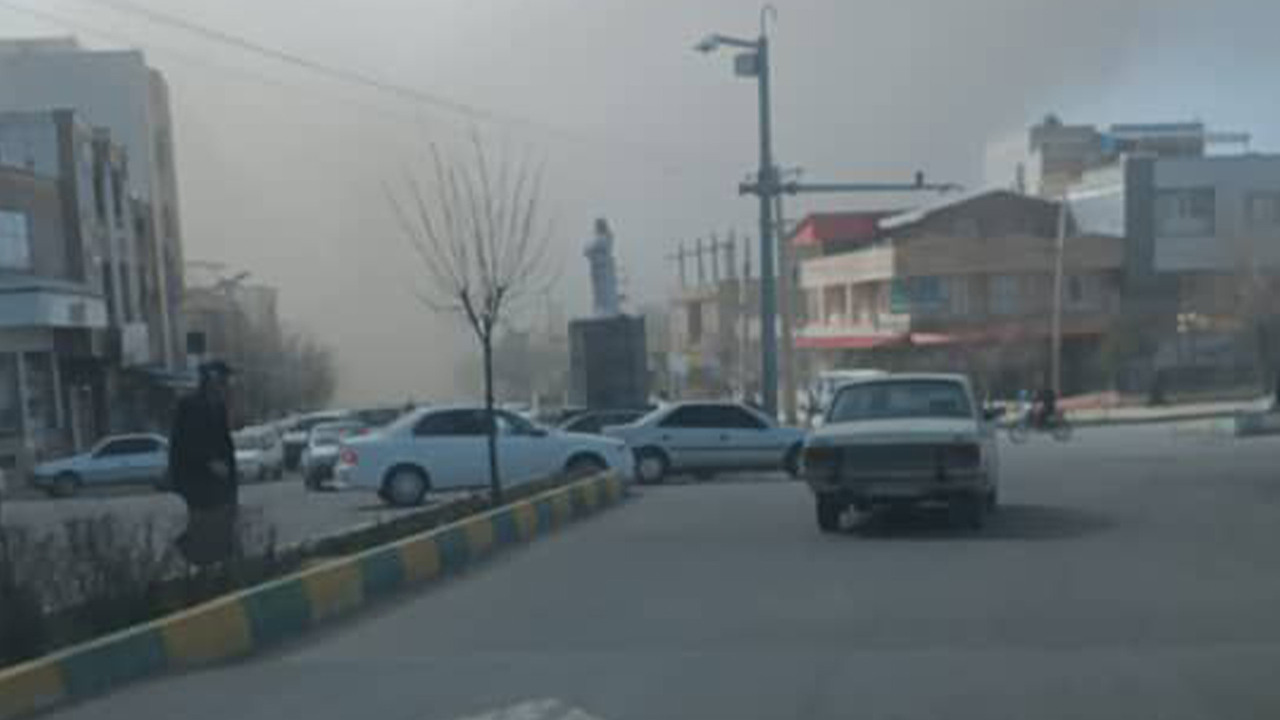
March 9, 2026; The following report indicates the systematic use of a “human shield” and the militarization of civilian spaces by the Islamic Republic, following the start of recent military conflicts in the city of Baneh. In these extensive displacements, the “Salahaddin Ayoubi” hospital has been converted into a base for the armed forces following the expulsion of medical staff, and public places such as mosques, sports halls, and cultural and literary centers have become locations for the deployment of war equipment and the continuous movement of military forces; an action that is considered a clear violation of the Additional Protocols to the Geneva Convention regarding the protection of civilians. Simultaneous with this news deadlock, the secret transfer of political prisoners to the city of Sanandaj, the selective release of a number of prisoners, and the creation of an information vacuum regarding the fate of detainees have brought concerns to a peak in an environment lacking international monitoring; therefore, the legal responsibility for any human catastrophe in these conditions lies directly with the government of the Islamic Republic.
The Status of Hospitals in the city of Baneh;
The Kurdpa source says in this regard; The city of Baneh has two large hospitals named “Salahaddin Ayoubi” and “Razi.” Previously, the citizens of this city mostly visited the “Salahaddin Ayoubi” hospital to receive medical services, and the “Razi” hospital was primarily dedicated to military forces and specific groups.
According to the information from this source, the “Salahaddin Ayoubi” hospital has practically been forced to evacuate due to the deployment of military forces, and many doctors and nurses of this medical center have left their workplace. Currently, the “Razi” hospital is considered the only active medical center for accepting patients in this city.
Kurdpa acknowledges that despite reports regarding the deployment of military forces in the “Salahaddin Ayoubi” hospital in the city of Baneh, no official or transparent information has been provided to the citizens regarding the status of this hospital so far. As a result, there is a possibility that patients may still visit this center to receive medical services, or medical staff, surgeons, and hospital employees may be forced to commute to it, and it is even possible that patients are still present in this center.
Such a situation can be an instance of endangering the lives of civilians; because according to international humanitarian law, medical centers and medical staff must enjoy special protection during armed conflicts, and the military use of these centers can put the lives of patients and staff at risk.
This source also acknowledges that so far, no report of civilian deaths has been published in this city.
The Status of Prisoners and Detainees;
According to this informed source; So far, a number of prisoners and detainees of the city of Baneh (the exact number of whom is not known) have been transferred to the Central Prison of the city of Sanandaj during the past few days. Also, a larger number of general crime prisoners compared to political prisoners have been released on bail; for example, out of every 20 prisoners, about 6 to 7 people have been released.
Bail requests have also been submitted for the release of a number of political prisoners. However, so far, no specific mechanism or information has been announced by government institutions regarding the status of prisoners and detainees; neither to their families nor at the level of public information.
Kurdpa acknowledges that the lack of transparent information and the publication of scattered and incomplete information about the status of prisoners has created serious concerns about their fate—especially political prisoners; prisoners who were previously sentenced to imprisonment through unfair trial processes, security case-building, and under torture and pressure. This situation has also made it difficult to accurately document the conditions of detention and the physical status of political prisoners, which is an instance of the violation of human rights and the protection of the lives of civilian citizens.
Tactics of the Military Forces of the Islamic Republic Following the Start of Military Attacks on Military-Government Centers in the city of Baneh:
Constant Change of Deployment Locations for Forces and Military Equipment;
According to the information from this source, the current tactic of the military forces of the Islamic Republic in recent days, following the start of attacks on military-government centers, is the constant change of deployment locations and the repeated movement of forces and military equipment in various parts of the city. These displacements began a few days ago, and military forces are continuously moving and changing locations.
According to this source, the places chosen for deployment mainly include public and civilian spaces. These places include sports halls, cultural and literary centers, the Department of Culture and Islamic Guidance, the Department of Agriculture, warehouses, hospitals, dormitories, mosques, and other public places. However, over the past few days, in some cases due to public pressure and protests, military forces, including law enforcement forces that had been deployed in some mosques, were forced to leave these places.
Deployment of Forces in the Houses of Basij and IRGC Forces;
Another tactic used by military forces for relocating and deployment is the use of private houses. According to the informed source of Kurdpa, houses belonging to Basij forces and local IRGC forces known as “Jash” have been ordered to accommodate between 15 to 20 military personnel in each house. These forces are on the move during the day and usually rest in these houses at night.
Departure of Senior Commanders from the City;
According to this report, on the other hand, senior and high-ranking forces in institutions such as the Ministry of Intelligence, the Revolutionary Guards (IRGC), and the Army have left the city, and currently, primarily mid-level military cadres and conscript soldiers remain inside the city of Baneh.
Evacuation of the IRGC “Salehabad” Base in the city of Baneh;
The IRGC “Salehabad” headquarters in the city of Baneh, which was targeted by military attacks in recent days, is known as the largest IRGC base in this city, which had been evacuated before the attack. The military equipment of this base was transferred to the city of “Kani Sur” in the “Namshir” district of the city of Baneh and deployed in an indoor futsal field. However, according to the informed source, forces and equipment are still moving and changing locations.
Centers Targeted in Military Attacks;
According to published images and reports, several military and government centers in the city of Baneh have so far been targeted by military attacks from Israel and the United States. These centers include the “Salehabad IRGC Garrison,” the “15 Khordad IRGC Base,” the “IRGC Garrison (District Headquarters) located on Bilal Habashi Street,” the “Ministry of Intelligence,” the “Justice Department Building,” “one of the IRGC headquarters adjacent to the Baneh Bridge,” as well as “IRGC and Army military bases inside the city of Baneh and at border points.”
The informed source of Kurdpa emphasizes at the end that most of the government's military organs in this city have been targeted so far.
The Kurdpa Human Rights Organization emphasizes that the actions taken in the city of Baneh are a clear violation of international rules. The instances of this violation are;
- Violation of the Principle of Distinction: According to Article 48 of the First Additional Protocol to the Geneva Conventions, the parties to a conflict must always distinguish between civilians and combatants, as well as between civilian objects and military objectives. Deploying forces in mosques, sports halls, and government offices turns these places into a “lawful military target” and endangers the lives of civilians.
- Use of Human Shields: According to Article 28 of the Fourth Geneva Convention and Article 12 of the First Protocol, using the presence of civilians to shield certain points or areas from military operations (deployment in crowded public places) is strictly prohibited. This action by the sovereignty is a clear example of using citizens as a human shield to protect mid-level military cadres and equipment.
- Violation of the Immunity of Medical Centers: Hospitals and religious units have special protection according to Article 19 of the Fourth Geneva Convention. Turning the “Salahaddin Ayoubi” hospital into a military base and expelling medical staff has not only denied the right to health but also means the cancellation of the immunity of this medical center during conflicts.
- Violation of the Right to Life and Physical Security of Prisoners: The secret transfer of prisoners under conditions of an internet shutdown and the lack of information provided to families is a violation of Article 9 of the International Covenant on Civil and Political Rights (ICCPR). This “short-term disappearance” and the creation of a news vacuum increases the risk of torture and inhuman treatment and places the direct responsibility for the lives of these individuals on the government.
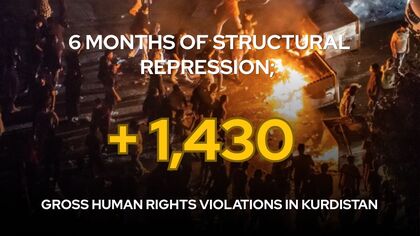
Image: A view of one of the streets in Baneh County during the initial days of the military attacks; smoke from explosions is visible in the sky of this city