Saqqez; The Killing of "Mohammad Rashidi," a Symbol of Security-Economic Policy: Gold for the Government, Destruction of Life and Environment for the People
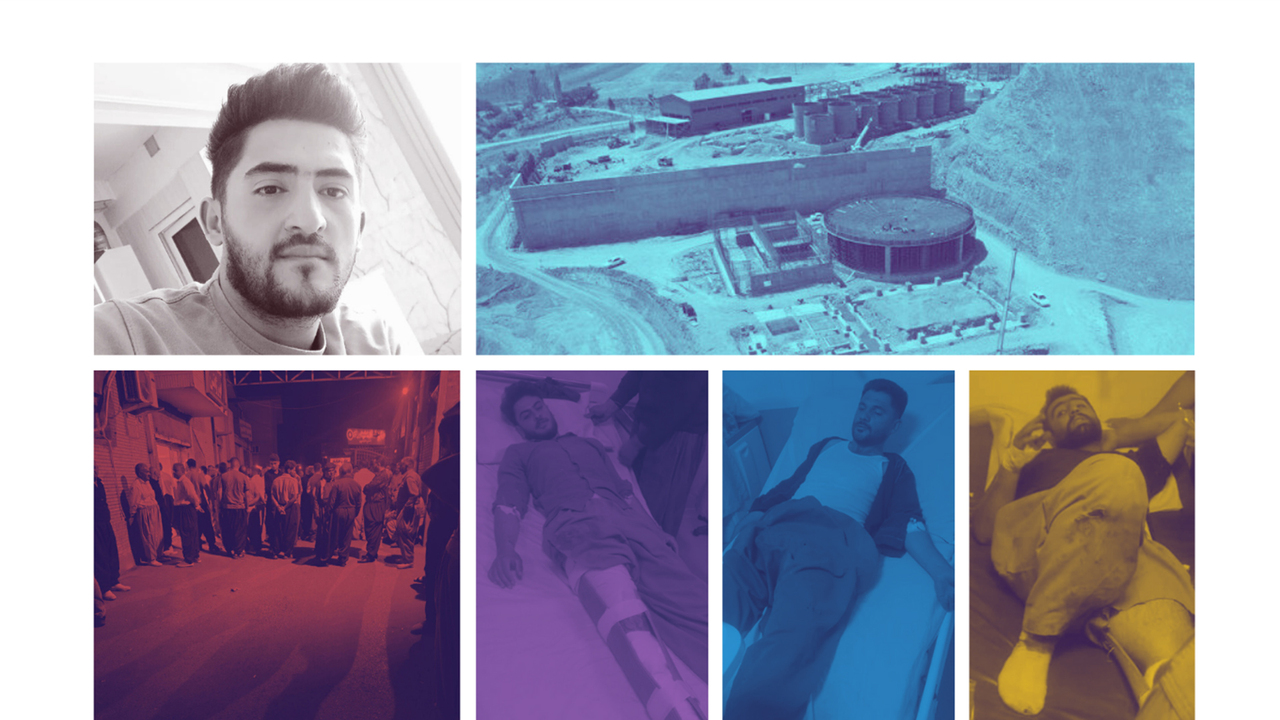
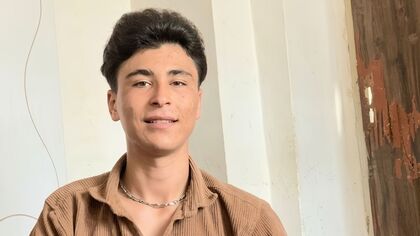
On the evening of September 15, 2025, 22-year-old "Mohammad Rashidi," while peacefully protesting the falling of rocks caused by the traffic of mining machinery, was targeted and killed by armed guards firing from a distance of approximately 15 meters; three others were also severely wounded.
Following this incident, with the intensification of the security atmosphere prior to the anniversary of the state-killing of Jina, the injured were transferred to another hospital and Mohammad's body was buried nocturnally; informed sources have reported the active role of an individual associated with the IRGC in accelerating the burial and attempting to settle the case. The official narrative of the media was general and incomplete, and the silence of the mining company and responsible institutions, along with news management, indicates that this event is not merely an "accident," but a manifestation of the security-economic policy governing the region; a policy that, with fencing, turrets, and armed protection, stifles local protests and prioritizes mining interests over the lives and environment of the people.
This report, based on conversations with several reliable sources on the night of September 18, 2025, provides a documented review of the killing of "Mohammad Rashidi," the lack of government accountability, and the public demand—from local campaigns to speeches in the mosque—for the closure of the mine that has threatened the lives, land, and environment of the people of the region.
A Narrative of the Killing of Mohammad Rashidi; Firing Bursts of War Weapons at Protesting Farmers from 15 Meters:
On the evening of Monday, September 15, 2025, armed guards of the "Qolqoleh" gold mine's protection unit, by firing war ammunition and bursts at several youths protesting the falling of rocks from heavy machinery traffic into their agricultural lands, led to the killing of a 22-year-old youth named "Mohammad Rashidi" and severely wounded three others named "Heimen Rashidi," "Ramyar Rashidi," and "Adel Rashidi."
According to an informed source speaking to Kurpa; these youths were from the village of "Pir Omran," a suburb of Saqqez, and were working in their agricultural lands at the foot of the mountains when rocks fell into their lands from the top of the mountain due to the traffic of heavy machinery. They went toward the mine's protection guards to inform them, but as soon as they moved forward to speak, while 15 meters away from reaching the guards, the guards targeted them with bursts of war ammunition.
According to one of the injured whose identity is protected by Kurpa, they had no intention of conflict and only wanted to warn about the rocks falling into their lands, as these rocks were a serious threat to the lives of their children. These youths had previously protested the dangers of falling rocks several times but received no response. When they approached the mine this time to raise their protest, they were met with war ammunition fire from armed guards, even though they had approached the guards empty-handed. Furthermore, prior to the shooting incident, these youths had never been asked to surrender their lands to the government.
"Mohammad Rashidi" was hit by a bullet in the abdomen area, which exited through his back. Additionally, Heimen Rashidi was hit by two bullets in his legs, causing the bone to protrude. Due to the severity of the injuries, he was transferred from Baneh Hospital to Sanandaj.
Secret Burial of Mohammad Rashidi on the Eve of the Anniversary of Jina's State-Killing; Under Pressure and Falsehoods of Officials Toward the Family to Prevent Public Gathering:
Following the severe injuries, these individuals, instead of being transferred to hospitals in Saqqez which had more facilities, were transferred to the less-equipped "Salahaddin Ayoubi" Hospital in Baneh. The reason for this decision was political-security; on the eve of the third anniversary of the state-killing of Jina-Mahsa Amini, Saqqez had become heavily securitized and militarized days in advance, and government institutions deliberately prevented the transfer of the injured to Saqqez Hospital. This forced relocation, despite the longer distance and lack of facilities at Baneh Hospital, worsened the condition of the injured, and "Mohammad Rashidi" died during the transfer due to this longer distance.
Mohammad Sadegh Pirouzi, the Law Enforcement Commander of Saqqez, and Seyyed Hossein Hosseini, the Chief Justice of Kurdistan Province, also confirmed in interviews with state media—without mentioning the name of the hospital, the injured, or why they were transferred to a hospital in another city—that "one of the injured died in the hospital."
However, government pressure did not end there. From the very first hours, security agencies and local officials, to prevent any public gathering, attempted to bury the body of "Mohammad Rashidi" nocturnally and secretly. "Ziaeddin Nemani," the Governor of Saqqez, "Ahmad Mohammad Rezaei," the Governor of Baneh, Second Brigadier General "Mohsen Ivani," the IRGC Commander of Saqqez, "Mohsen Biglari," the Member of Parliament for Saqqez and Baneh, "Arash Zare-tan Lehoni," the Governor of Kurdistan Province, and members of the "Pir Omran" village council, were all present at Baneh Hospital to control this process. The Governor of Saqqez even promised to dispatch an ambulance and a helicopter for the rapid execution of the nocturnal burial.
According to an informed source speaking to Kurpa; in this context, the role of "Mohammad Latif Rashidi," the uncle of "Mohammad Rashidi" and a local member of the IRGC (known in Kurdistan as "Jash"), was decisive. Relying on his military position, he imposed the decision of the nocturnal burial of his nephew upon the family and the tribe. Mohammad's father, "Jalal Rashidi," described as a simple and unassuming person, as well as his grandfather, were opposed to this decision, but under the pressure and threats of the IRGC, they were unable to resist. Even while the body was at Baneh Hospital, Mohammad's father and grandfather were directly summoned to an IRGC center and forced to agree to the nocturnal burial.
Ultimately, Mohammad Rashidi's body was buried at 3:00 AM in the village of "Pir Omran" without the presence of the public. While many residents and people from surrounding villages attempted to reach the ceremony, they were either turned back halfway or fundamentally denied presence due to IRGC threats and control.
Following this forced burial, the Governor of Saqqez and the IRGC Commander appeared at the village mosque and, in contradictory remarks, claimed: "We do not know who did the shooting, and it was likely groups from the outside." This was while the same officials had previously promised at the hospital that "the perpetrators of the shooting will be detained and punished." This blatant lie not only increased the anger and mistrust of the people but also demonstrated once again that covering up the crime is part of the government policy to suppress the protesting people of Kurdistan.
Fruitless Public Complaints and the Settlement of the IRGC-Member Uncle with Government Agencies to Close the Case of "Mohammad Rashidi’s" Killing:
According to Kurpa’s informed source; regarding the complaint and legal follow-up of the armed guards' shooting at these youths, a number of people had requested lawyers to issue a statement on why this company possesses weapons and why its guards fire at people. However, this has led nowhere so far.
On the other hand, reports indicate that "Mohammad Latif Rashidi," the local IRGC member and uncle of "Mohammad Rashidi," is attempting to make peace with IRGC forces so that no complaint is filed regarding his "nephew's" killing, and ultimately to end the matter of his death by receiving money and registering "Mohammad Rashidi" in the Martyrs Foundation.
According to an informed source speaking to Kurpa, the individual who shot "Mohammad Rashidi" is named "Behrouz Keyghobadi," who works as a mine guard. He is among the local IRGC forces known as "Jash" who was hired for the guarding and protection department. One of the local individuals known as "Jash" identified as involved with Mohammad Rashidi is "Behrouz Keyghobadi," and he was active in the guarding and protection of the mine.
Qolqoleh Gold Mine; Military-Security Siege and Protests Suppressed with Blood So Far, and the Return of Mine Protection with Intensified Violence:
According to informed sources speaking to Kurpa, the guard department and the protection committee of the Qolqoleh gold mine in Saqqez consist of individuals including "thugs and hoodlums" and some locals close to the government known in Kurdish culture as "Jash," and in even some cases, addicted individuals have been hired in this collective. All these individuals operate under the direct supervision of Saeid Babamoradi, the head of mine protection.
Furthermore, the area around the factory is completely fenced, armed guards are stationed there, and turrets have been installed to control the region. Residents of surrounding villages are forced to seek permission from the guards to access their agricultural lands, and their freedom of movement is severely restricted.
Since the construction of the mine, a military and security atmosphere has prevailed over the surrounding villages. On the Saqqez-Baneh road, near the "Kilekhani" tunnel, which is a place of seasonal migration (Yeylaq and Qeshlaq) for the people, an outpost has been established that prevents the passage of residents' vehicles, allowing only pedestrian transit. Previously, two other outposts named "Mirgeh Naghshineh" and "Mirde-di" were stationed in this area, where IRGC and military forces were present.
According to informed sources, the people of the villages around the Qolqoleh gold mine have repeatedly protested the construction of the mine, but have received no response from officials. Even when residents blocked the illegal traffic of mining machinery, the officials' response was: "We will return with a permit and you can do nothing." Nevertheless, the people of "Pir Omran" village have repeatedly declared: "We will not compromise over our lands," while government institutions claimed: "We will seize the lands."
Additionally, after the killing of "Mohammad Rashidi," the public atmosphere of the region turned intensely negative against the mine and its employees, and the dissatisfaction and protest of the people of surrounding villages increased, such that feelings of mistrust and anger toward the project and its stakeholders intensified. For this reason, the mine temporarily halted its operations after this event to allow efforts for peace and ending the matter to take place; however, it is predicted to return to activity within a week, this time with a more violent approach and less accountability than before. This concern is reinforced as gold extraction was observed in the village of "Mirgeh Naghshineh" on September 18, 2025.
Systematic Concealment; Incomplete Narrative of Officials and State Media to Manage the Issue According to Security-Economic Demands
Following the fatal shooting at the Qolqoleh gold mine in Saqqez, which resulted in the killing of "Mohammad Rashidi" and the wounding of several others, some local and provincial officials showed reactions; reactions that remained mostly at the level of condolences, promises, and generalities.
The Governor of Saqqez, Ziaeddin Nemani, issued a message declaring "the government will stand by the bereaved families" and promised "dealing with the perpetrators of the incident is on the agenda." Meanwhile, Mohsen Biglari, the representative of Saqqez and Baneh in Parliament, by publishing a message of condolence, claimed he would follow the matter with "serious pursuit" and emphasized he would "not compromise with anyone." On the other hand, the Governor of Kurdistan, Arash Zare-tan Lehoni, visited the injured at Kowsar Hospital in Sanandaj and said "necessary measures for a precise investigation of the case have begun." Even the Chief Justice of Kurdistan Province spoke of the "serious entry of the judicial system" into this incident.
The Chief Justice of Kurdistan Province, Hojat-ol-Islam Seyyed Hossein Hosseini, and the Law Enforcement Commander of Saqqez, Colonel Mohammad Sadegh Pirouzi, informed state media only to the extent of confirming the "occurrence of the shooting" and the killing and wounding of four people at the Qolqoleh gold mine. In these official narratives, no mention was made of the names and identities of the injured, details of the shooters, the direct responsibility of the mine's protection agencies, or even the name of the hospital to which the wounded were transferred; let alone the reason for their transfer to another city.
This level of ambiguity and lack of transparency in the government narrative shows that the management of this incident was conducted from the beginning with the goal of controlling public opinion and limiting narratives. Officials, with generalities and repeated promises, tried to lower the level of public sensitivity so they could later wrap up the issue according to the wishes of the beneficiary security and economic institutions.
Alongside this, the meaningful silence of the Saqqez Gold Mine Company and the related security and protection collectives must be noted. So far, no official explanation has been published by the mine managers or monitoring institutions regarding how the shooting occurred and the responsibility of the armed individuals. Furthermore, official media became completely silent after publishing a few short and detail-less news items.
Until the moment of publication of this report, no serious pursuit or clarification has taken place in the media, and complete ambiguity continues to overshadow the judicial process and the responsibility of the perpetrators of this fatal shooting.
Religious Scholars (Mamostas) of Pir Omran and Arjamandi Mosque of Saqqez: Kak Mohammad was Martyred Oppressively in Defense of Rights; People Still Demand the Closure of the Mine and an End to Killings in Defense of Their Rights:
The Friday Imam of "Pir Omran" village, at the burial ceremony of "Mohammad Rashidi," noted with determination; "Let the video be broadcast, I say this, if this act is not unjust, nothing is unjust." He continued that the oppression that occurred is so prominent that "from this moment and hour and from this youth's death onward, we will under no circumstances be satisfied or accept that they destroy our country and also kill our youths." The Friday Imam, emphasizing the righteousness of the deceased, added; "We all bear witness that you are a martyr."
Additionally, Mamosta Basat, the Imam of the "Haji Arjamandi" mosque in Saqqez, said at the memorial service for "Mohammad Rashidi" in the village of "Pir Omran" on September 16, 2025, that; "The most valuable death is death in the path of defending rights" and emphasized that Kak Mohammad was martyred oppressively for defending his land, family, and people, and as a Kurd. Citing religious teachings and Kurdish culture, he added that religion and Kurdish identity teach courage and resistance against oppression: "Bowing one's head before oppression is worse than the oppression itself"; therefore, defending land and family is obligatory and respected and holds the status of martyrdom.
Mamosta Basat then addressed the demands of the people and said that the residents have protested many times and launched campaigns, but the government has not responded: "We requested the government, we gathered signatures, but we received no answer. If I say we do not want the mine, must you kill us? If I say do not destroy our land, must you kill us?" He warned that the danger does not only concern the villages of "Pir Omran," "Qolqoleh," or "Karouian"; the lives of the people of Saqqez, the Azerbaijan region, and even neighboring provinces are also in danger.
The conclusion of his message was explicit and calling; it is the public demand that the mine be closed; this is the right of Kak Mohammad and the right of the people of Kurdistan, and the residents of the region must not back down. The Mamosta called on all institutions, from representatives to the governor and high-ranking officials, to "come online" and respond officially and clearly to this demand, because this issue is not just a local protest, but a defense of the health, environment, and collective life of the people of the region.
Prepared by: Awin Mostafazadeh