Turkey: Arya Ostadebrahimi, a "Jin, Jiyan, Azadi" Protester with 80 Pellets in His Body, at Risk of Deportation to Iran
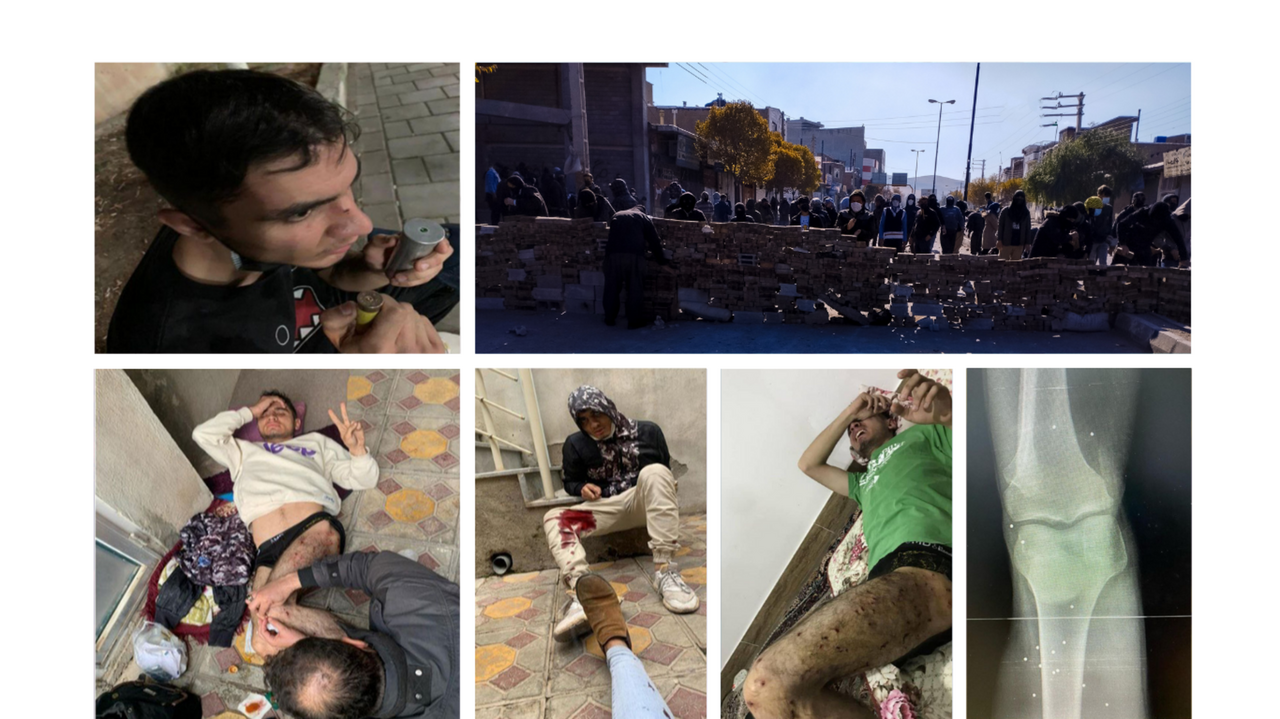
October 12, 2025; Arya Ostadebrahimi, a young "Jin, Jiyan, Azadi" protester from Mahabad who was targeted by more than 100 pellet bullets during the protests and lives with approximately 80 lead pellets in his body and a damaged left leg, has lived as an asylum seeker in Turkey for over two and a half years. On October 10, 2025, he was arrested by Turkish Border Guard forces and transferred to a deportation camp. Although he was released two days later, he is still being threatened to report back to the camp. His situation in Turkey is extremely critical; his legal residency is at risk of revocation, he is constantly exposed to deportation to Iran, and deprived of medical services and insurance, he faces a serious threat to his life and security at any moment.
Arya Ostadebrahimi stated in an interview with Kurdpa: On Friday, October 10, 2025, he was arrested by Turkish Border Guard forces in the city of "Datça" and transferred to the "Muğla" deportation camp. During the arrest, his mobile phone was taken, and he was moved to the camp without any explanation. However, on Sunday, October 12, 2025, following the intervention of a lawyer and follow-ups by human rights defenders, the border guard forces released him from the camp. Nevertheless, he was told that he must surrender himself again to the initial camp in one of the cities of Turkey for his case to be reviewed; the name of this city is not published by Kurdpa due to security considerations and the possibility of access by the forces of the Islamic Republic.
The main concern now is that Arya's residency in Turkey has been revoked and he may be deported to Iran. Over the past two and a half years, he has lived legally in Turkey with a "Kimlik" residency document while his case was being processed. Previously, his "Kimlik" card was confiscated by the Turkish MIT (Intelligence Agency), and he was required to sign weekly to register his presence.
Arya Ostadebrahimi left Iran illegally on February 20, 2023, after being identified by Iranian security forces and following death threats against his family and night raids. He has now lived as an asylum seeker in Turkey for over two and a half years. Living with approximately 80 lead pellets in his body and a damaged, painful left leg, he lives in exile under constant anxiety of arrest and deportation to Iran, having been continuously at risk of being returned during this period.
His security situation in Turkey is very concerning; the Turkish government moved him to one of the border cities near Iran, and there is constant fear that Islamic Republic forces might gain access to him. Arya is deprived of insurance and medical services and is required to visit the Migration Management office weekly to register his presence. However, due to the fear of arrest and deportation, he has not reported for presence registration for some time, as several political asylum seekers were previously arrested while signing for presence and returned to Iran.
Kurdpa Human Rights Organization declares that Arya Ostadebrahimi, a young "Jin, Jiyan, Azadi" protester, is currently under the most severe security threats in Turkey, and his life is in serious danger. In the event of deportation to Iran, he will face an in-absentia sentence, immediate arrest, the possibility of torture, and a threat to his life, as he was previously identified by security forces and his family was severely threatened. Kurdpa calls on all responsible governments, defenders of human lives, and human rights organizations to intervene in his case and take immediate action to protect the life and security of Arya, to save him from being returned to a country that threatens his life and freedom.
Arya Ostadebrahimi was targeted by more than a hundred pellet bullets while saving the lives of a mother and a 9-year-old girl, and after three years, he still struggles with pain, lead wounds, and a restricted life;
On October 27, 2022, the forty-first day of the "Jin, Jiyan, Azadi" revolutionary uprising and following the fortieth-day ceremony for the state murder of Jina-Mahsa Amini, the wave of popular protests reached a new turning point. On this day, many cities in Kurdistan and Iran were scenes of widespread protests. The Islamic Republic, which had suppressed protesters with bullets and blood since the first days of the uprising, had taken the lives of at least 54 people in Kurdistan by then; but on that forty-first day alone, seven other Kurdish citizens were killed in a single day. Among them, Fereshteh Ahmadi, Kobra Sheykheh-Saqa, Shaho Khezri, and Zanyar Aboubakri died in Mahabad. This massacre doubled the people's anger and the scope of protests expanded.
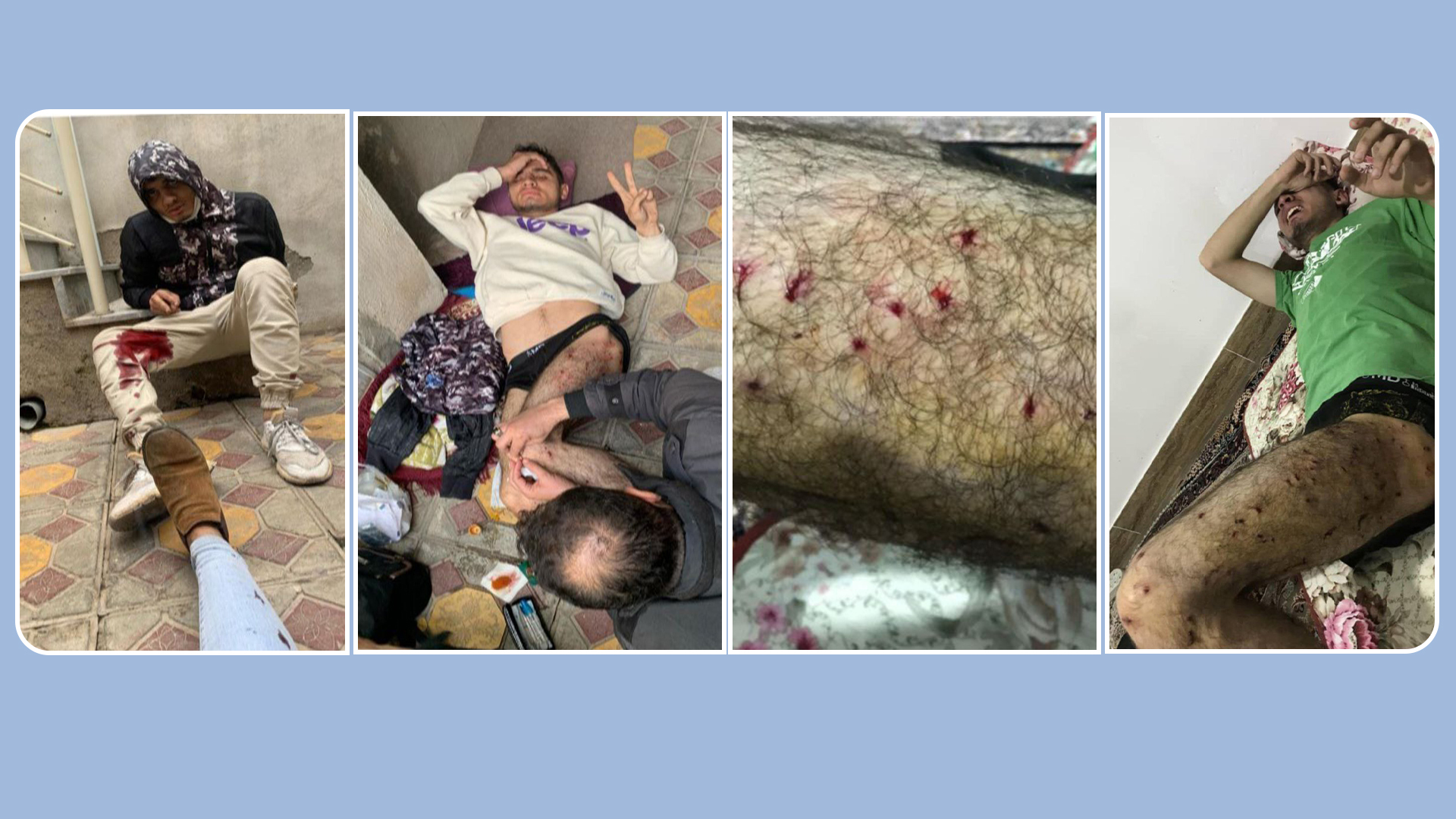
On the same day, Arya Ostadebrahimi was also targeted by gunfire. In the midst of the bloody suppression by government forces, while he was attempting to save a mother and her 9-year-old daughter from the risk of arrest and move them away from the conflict area, he was targeted from a close distance with more than 100 pellet bullets. As a result of these shots, from the tips of his fingers to his left hip, from the tip of his foot to near the right hip, his left hand, and his left side were filled with pellets. People present at the scene moved him away from the conflict to save him from the suppression forces.
Due to the securitization of hospital environments and the deployment of security forces in medical centers, visiting a hospital for wounded protesters meant the risk of arrest and death. Arya himself says: "In those days, if someone fell into the hands of security forces, it was unlikely they would survive. Agents were stationed in hospitals and would identify, arrest, and disappear wounded protesters. If I had gone to the hospital, the probability of my survival was very low." For this reason, he was treated with the help of volunteer medical personnel in safe locations outside of hospitals.
Arya was active in the protests from the early days of the uprising and assisted other wounded individuals as well. He would transfer them to safe shelters so that volunteer doctors could treat them under limited conditions.
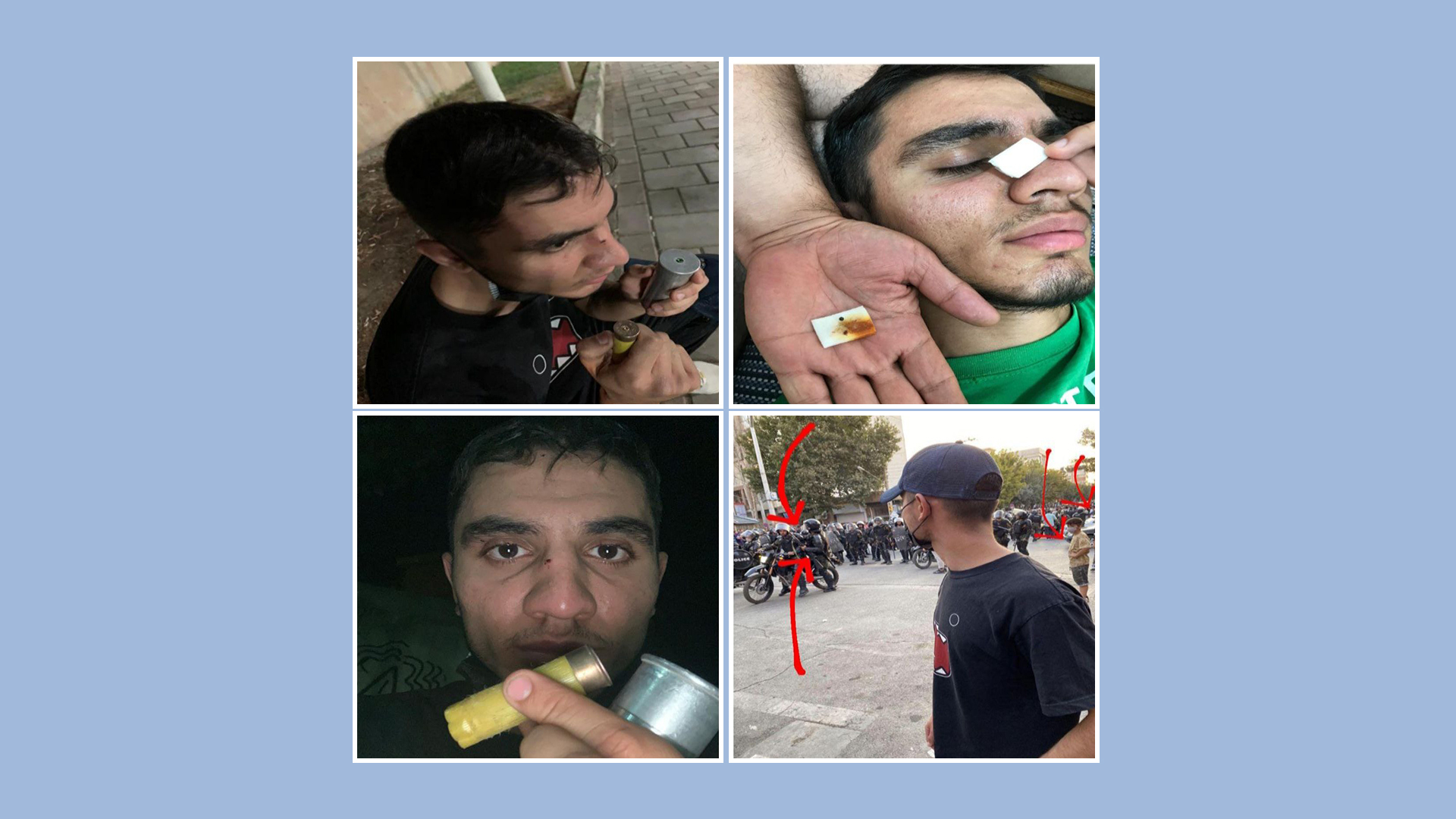
Prior to this severe injury, Arya had been targeted by pellet bullets several times. About ten days before the events of October 27, in one of the attacks by security forces, several pellets had hit the back of his neck and his face. He says: "I was very lucky that I didn't go blind. One of the pellets hit my nose instead of my eye."
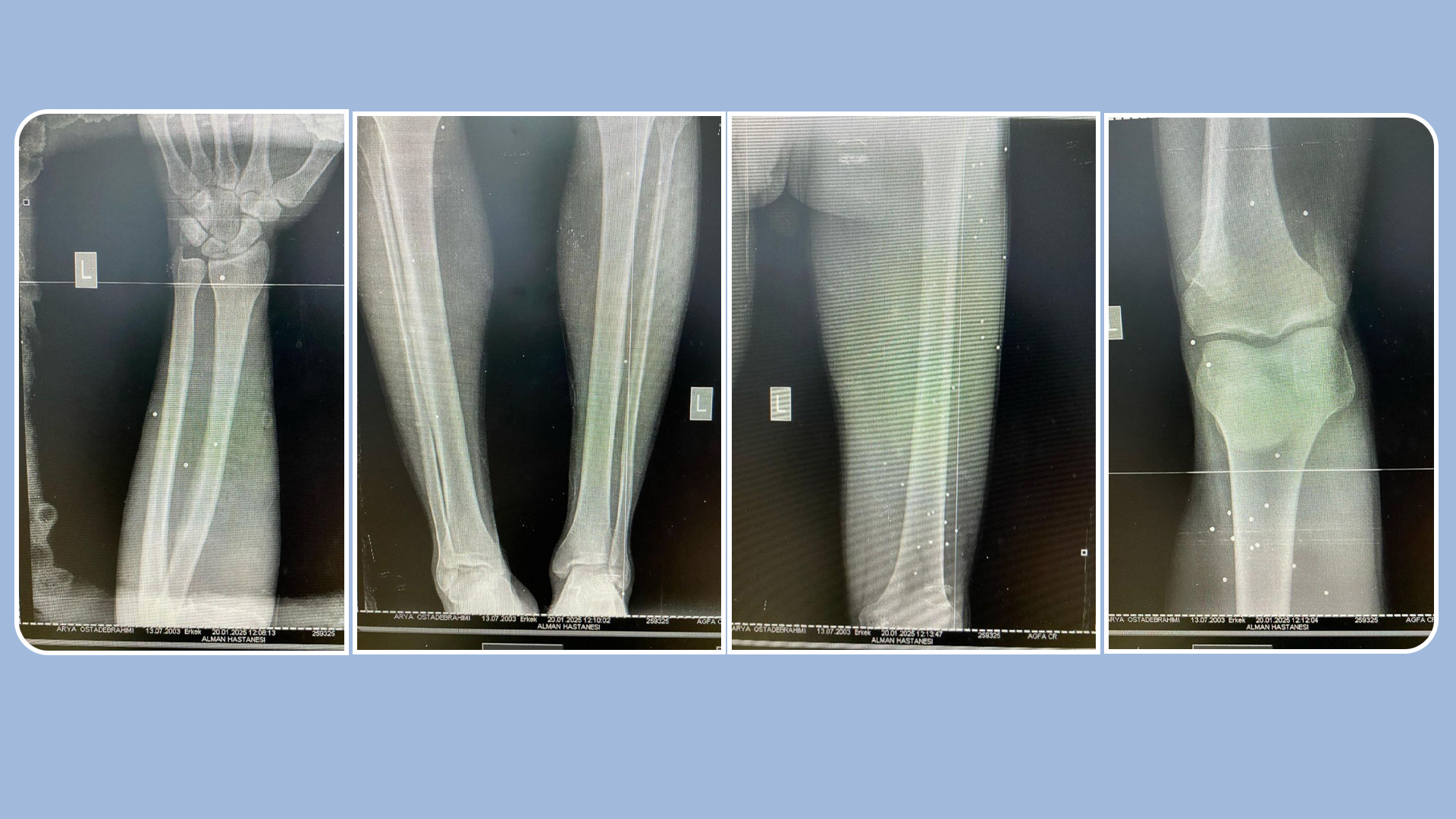
From the shooting of more than a hundred bullets on October 27, the volunteer doctor was able to remove only about 30 pellets from his body. However, more than 80 pellets still remain in his body. The results of medical examinations in Turkey have also confirmed this, stating that many pellets have penetrated deep into the tissues.
Chronic pain and a restricted life after being shot with more than a hundred pellets; Arya Ostadebrahimi still struggles with lead wounds in his hands and legs, severe pain, clothing limitations, and even the most difficult moments of sleep;
As a result of this situation, Arya still struggles with chronic pain. He limps on his left leg because one of the pellets is embedded in the leg bone, and without advanced surgical equipment, it is not possible to remove it. Turkish doctors, after detailed examinations, have warned that surgery to remove the remaining pellets could be very dangerous; because several of them are located in sensitive areas such as around the veins of the left forearm, behind the knee, the bend of the leg, and the left groin.
The lack of advanced surgical facilities and the heavy costs of surgery in Turkey have meant that it has not been possible to remove the pellets so far. Arya says: "The pellets that hit my knees are palpable."
His left hand, left leg, and especially his right leg are still painful. Sometimes the areas around the pellets become red, swollen, and itchy, and the skin color changes. He has to regularly disinfect these areas and constantly take antibiotics to prevent infection.
Daily life has become difficult for Arya. He says: "Touching my body is almost impossible because it is painful. I only wear loose clothing so that fabric contact with my legs and hand is minimized. Tight pants like denim are unbearable for me."
Winter is the hardest season for him. The pellets are made of lead, and the cold weather intensifies the pain. Even strong painkillers do not have much effect. During this season, he can only use very loose jackets and pants to have the least contact with his body.
Arya says the hardest part of his life is sleeping: "When I'm asleep, if I unconsciously fall on my side or my weight falls on my left leg, I jump awake from the intensity of the pain. It's as if a syringe is being pushed into my wrist with pressure."
Despite three years passing since that bloody day, the pellets are still alive in Arya's body; lead mementos of a day when a man was targeted by more than a hundred bullets to save the lives of a mother and daughter.
Identification and pursuit for the arrest of Arya Ostadebrahimi; In-absentia conviction, blocking of National ID Code, and forced exit from Iran;
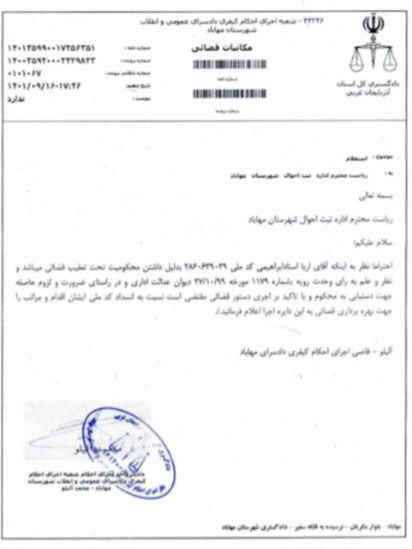
Arya Ostadebrahimi, a young Kurdish protester, was identified by security forces after active participation in nationwide protests. On December 7, 2022, in an official correspondence from the Criminal Sentence Execution Branch of the Public and Revolutionary Prosecutor's Office of Mahabad County, presided over by the execution judge, "Mohammad Alilou," the Mahabad Civil Registry Office was informed that Arya is wanted due to "having a judicial conviction" and his National ID Code must be blocked, which eventually occurred.
Prior to this correspondence, Arya had been asked several times to report to the Criminal Sentence Execution Branch of the Public and Revolutionary Prosecutor's Office of Mahabad so that his conviction could be explained to him and he could undergo the stages of sentence execution. However, this conviction had been issued in absentia and without official notification or summons to him. It was never specified on what charges, by which court, and with what evidence this verdict was issued. Therefore, Arya's presence for the notification and execution of the sentence in this branch was deemed mandatory, and when he refused to report to the branch, his National ID Code was blocked.
With increasing security pressures and the risk of imminent arrest, Arya decided to leave the country before security forces could capture him. He left Iran illegally on February 20, 2023, and reached Turkey.
The blocking of a National ID Code in Iran causes an individual to be deprived of access to most citizenship services; they cannot open a bank account or use a bank card, use medical services and insurance, receive or renew a passport or birth certificate, enroll in formal education or university, be employed, or even participate in the official buying and selling of property, vehicles, or SIM cards. Generally, the blocking of the National ID Code removes the individual from the administrative, economic, and social system of the country.
Death threats and night raids by security forces on the family of Arya Ostadebrahimi; When his mother, father, and two sisters were subjected to intimidation and battery for his arrest, and his personal belongings were confiscated;
In continuation of the pressure by security forces to arrest Arya, they raided his father's home several times and severely threatened his family. Arya's mother, father, and two sisters were threatened with death in these attacks, and his personal belongings and laptop were confiscated; items that were never returned to him.
Arya says that during these attacks, security forces told his father: "We will take you and your two daughters and torture you so much until you hand over your son, otherwise we will deliver him to you in pieces. Just as we made some protesters nameless and trace-less, we will do the same to you, your family, your son, and especially your daughters. You must either hand over your son, or we will take your little daughter with us. We can do whatever we want to your daughter."
At the time of these threats, Arya's younger sister was only 9 years old. He continues: "In the middle of the night, at three in the morning, with shouting and boots on, agents with weapons would attack our house and threaten my family. Once they intended to batter my older sister. With her shouting and resistance, my mother intervened to defend her daughter, but the agents pushed her and threatened to hit her as well. My little sister has not yet forgotten the fear of those nights."
Arya says that when the agents saw that his father would not surrender and was not afraid of their threats, the more they applied pressure, the more resilient his family became, and they eventually left them alone. In those days, Arya's mother was also in a difficult condition due to poor physical health and illness.
Arya Ostadebrahimi: Arya Ostadebrahimi, born on July 13, 2003, holds a high school diploma in Humanities and was on the path to studying Law to become a lawyer. He is also an athlete and has a history of activity in boxing and running.
Images of Arya's injury with more than 100 pellet bullets in the October 27, 2022 protests;
CT scan images of the status of the pellets fired into Arya Ostadebrahimi's body;
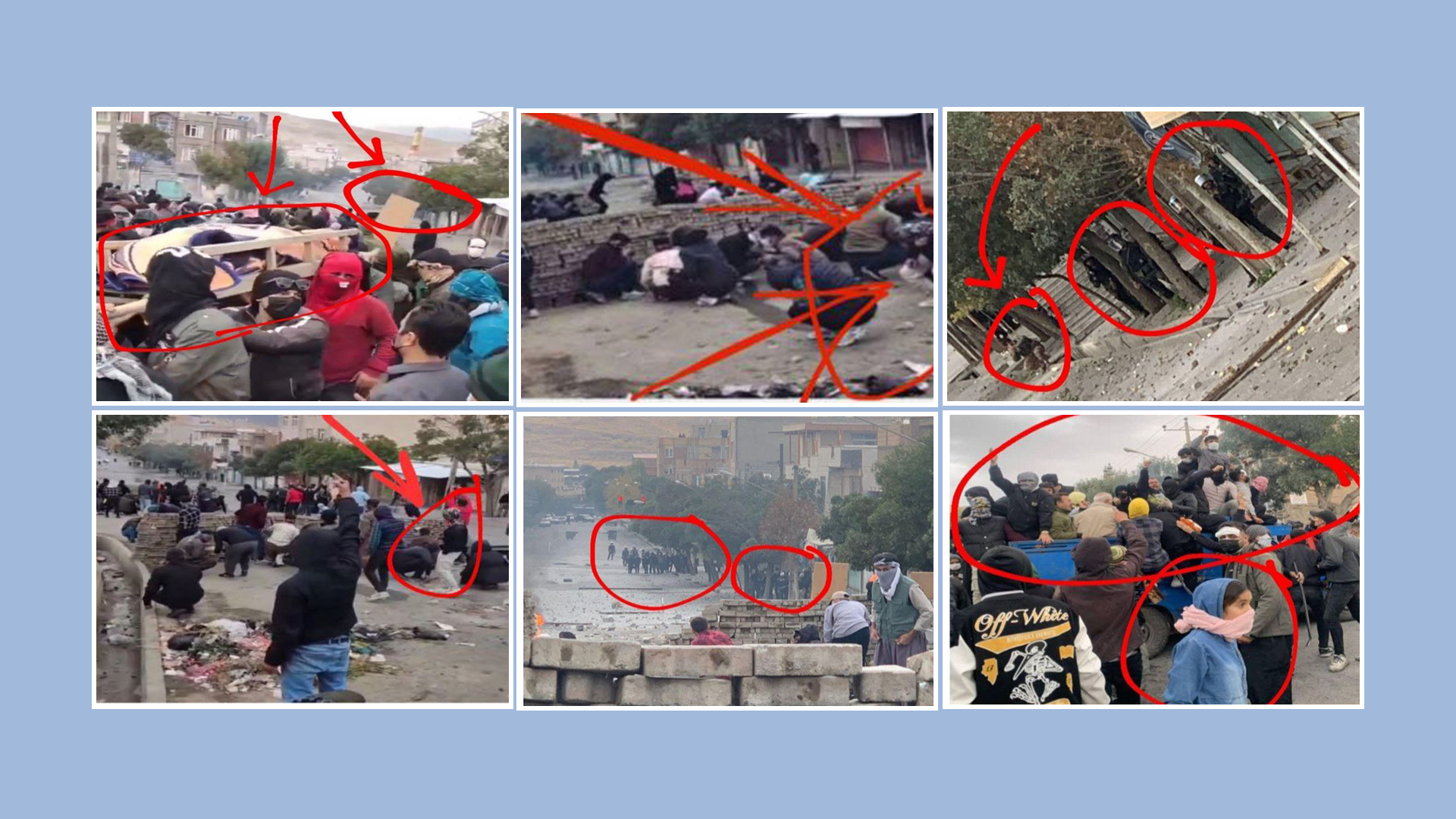
Images of Arya Ostadebrahimi's presence in the protests;
Other images of several pellet bullets hitting Arya's nose and the back of his head;
An image of the Mahabad Public and Revolutionary Prosecutor's Office order to block Arya's National ID Code;
This narrative was prepared based on documents provided by Arya Ostadebrahimi to Kurdpa, as well as his direct interview with Kurdpa regarding his latest situation after his arrest in Turkey. Part of the narrative is also taken from Arya's interviews with the media outlet "IranWire," specifically the parts related to his injury, physical condition after three years, and the threats against his family. Arya has confirmed all this information, and Kurdpa, according to the principles of journalistic ethics, mentions the name "IranWire."
Compiled by: Awin Mostafazadeh