Account of an Eyewitness Regarding the Killing and Operations of an Organized Suppression Group in Tehran; With Military Formation and Tear Gas, Pellet Guns, Kalashnikovs, and Snipers
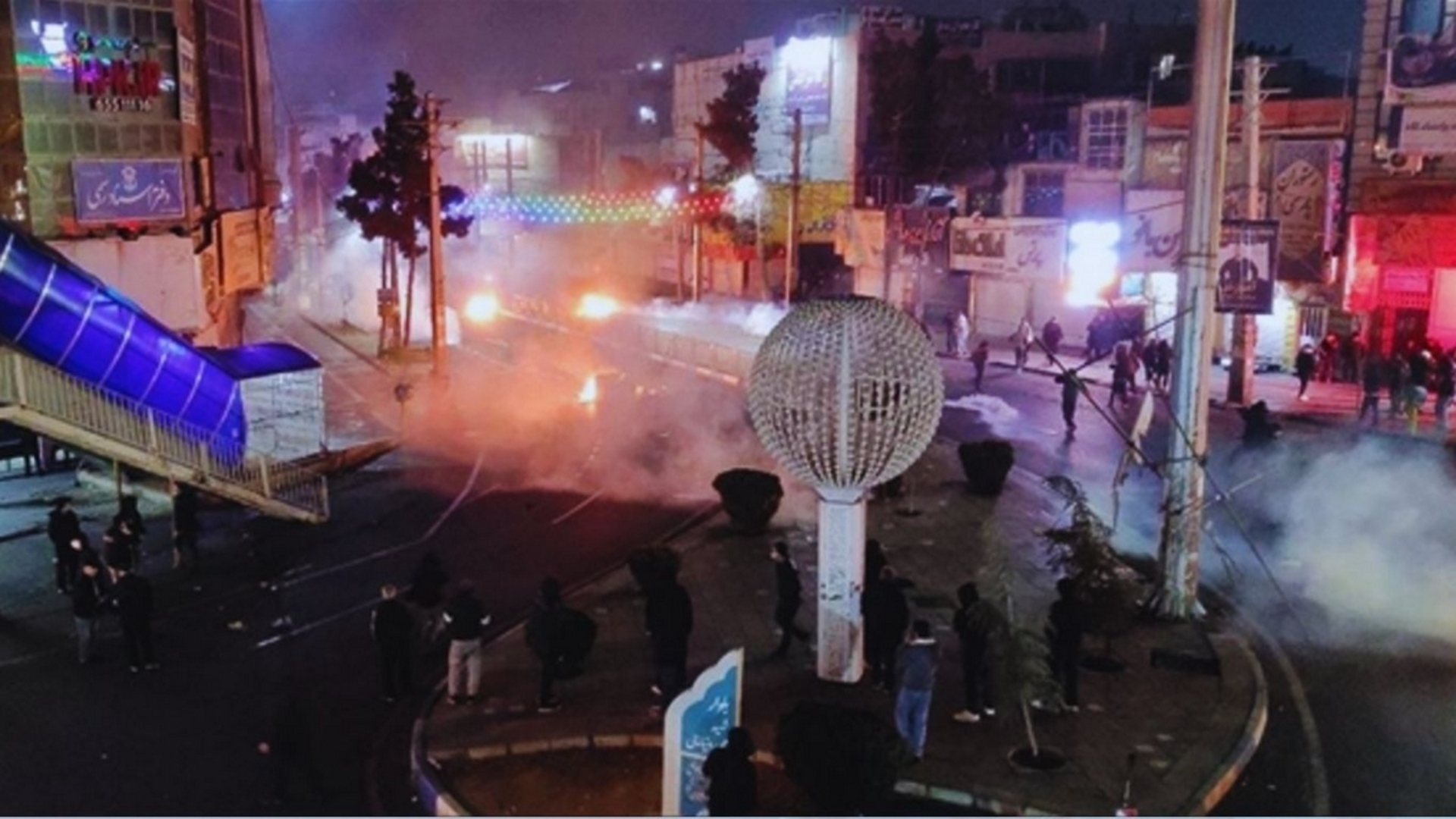
February 20, 2026; The account of an eyewitness in one of the districts of Tehran City regarding the performance of a suppression force group of the Islamic Republic of Iran on the night of January 9, 2026, indicates that the suppression forces, in an organized manner and with divided tasks, consisting of forces responsible for firing tear gas, pellet guns, “Kalashnikov” combat weapons, and “Sniper” combat weapons, carried out a planned killing and suppression. According to this witness, on this night, they spared no effort or crime in their suppression.
Kurdpa obtained this information through an informed source in Tehran City, and to maintain the security of this individual, the specific neighborhood is not mentioned. This report attempts to present the narrative objectively and show how the suppression forces of the Islamic Republic operated during a short period of the suppression on the night of January 9, 2026.
The account of this witness shows the performance of a suppression group during a short interval on the night of January 9; an organized group equipped with “tear gas,” “pellet guns,” “Kalashnikovs,” and “snipers” which, with a specific formation, would first fire tear gas, then shoot at people with pellet guns, and subsequently with combat weapons, while simultaneously snipers targeted rooftops. This account includes descriptions of extensive gunfire, shots to the head and throat, wide use of tear gas, and the killing of at least two people before the witness's eyes.
What happened on the nights of January 8 and 9, 2026?
During these two nights, thousands of people in this district had come out, and large protests were underway; something unprecedented in this area. Heavy shooting was carried out by the suppression forces of the Islamic Republic toward the people. On the night of January 8, people had created fire blockades in the streets and continued protests with slogans of “Death to Khamenei.”
Protests continued on the second night, January 9, with the difference that on this night, it seemed the suppression forces no longer hesitated to commit any shooting or crime against the people. The performance of the suppression groups in dealing with the people fully demonstrated this reality, as if they had employed all their power for suppression. The protests and suppression in this district were underway while many families affiliated with the government and various state organs also resided in this area.
Organized suppression group equipped with types of combat weapons, pellet guns, and tear gas;
Regarding the composition of one of the suppression groups, this eyewitness says: the performance, behavior, and military formation of this group showed they were organized. This group consisted of approximately 10 or more than 10 people. Two individuals had weapons such as “Taper” or “Shotguns” and moved ahead of the rest. Two individuals on the left and right of the group fired tear gas. Behind them were forces armed with “Kalashnikov” combat weapons, and at the end of the group, two individuals armed with “Snipers” using weapons like “SVD Dragunov” (Ghanaseh) were present.
Their operation was such that they first threw tear gas, then fired with pellet guns, and subsequently opened fire on the people with “Kalashnikov” combat weapons. The “Sniper” individuals monitored the rooftops and shot at people present on the roofs.
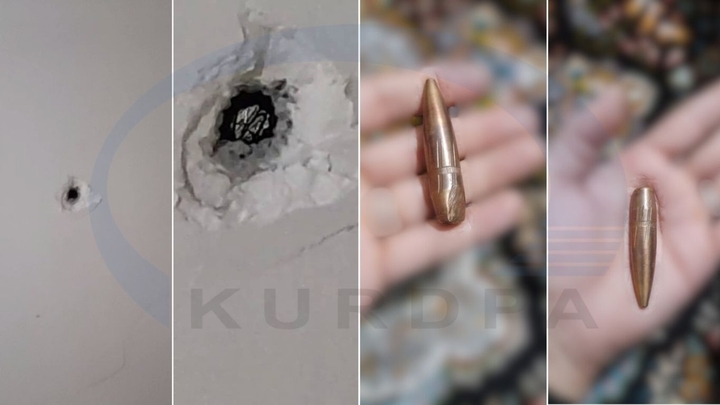
The combat bullets of the “snipers” seemed larger than those of the “Ghanaseh” and could pass through walls;
Regarding the type and performance of the “sniper” weapon bullets, this witness says: those who held weapons like the “Ghanaseh,” based on the type of bullets, it seemed their bullets were larger than a standard “Ghanaseh” rifle. As seen in the image, it could pierce the wall and pass through, and upon hitting the wall, it had a high sound and intensity of destruction.
Image of the sniper bullet casings fired at people;
Tear gas firing that even reached the rooftops of houses;
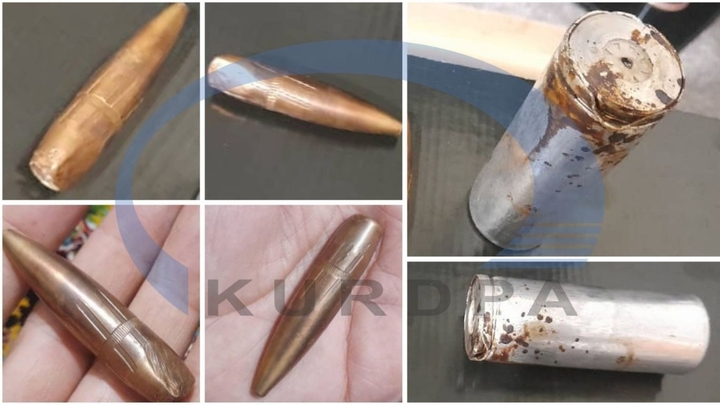
With yellow and brown colors and unmarked casings, it is unclear what materials were used for its manufacture;
This witness says regarding the extensive use of tear gas that within a short period, so much tear gas was fired that for four hours after the suppression group left, people could not breathe. One of the tear gas canisters was fired onto the rooftop of a residence. the gases had “yellow” and “brown” colors and despite the quick retreat of people from the rooftops into the houses, they could not breathe properly inside the homes for up to an hour. The pain and burning were intense, and when it entered the eyes or throat, nothing could soothe it, and any part of the body touched felt a severe burning sensation.
The tear gas casings were “unmarked” and simple, and according to the witness, it seemed they were custom-made so that the materials used in their construction would not be identified, likely containing dangerous and non-standard substances.
Image of the tear gas canisters fired at people;
I saw the killing of two people who were shot in the head and throat with combat bullets;
This witness says that on the night of January 9, they witnessed the killing of two people with combat bullets to the head and throat. One of these individuals was targeted in the head by a combat bullet on the main street and died instantly; people quickly took him away so he would not fall into the hands of the suppression group.
The other was targeted and killed in front of the entrance and stairs of a house. After the shooting, the suppression group intended to abduct his body. When people shouted from the windows and gathered over the corpse, the suppression forces retreated; however, they boarded the “Saipa” vehicle of the killed individual, stole it, and took it with them.
This victim was “Saeid Shahgoli.” He was shot in the throat; the bullet had penetrated his jaw, he could not breathe, and was coughing up a lot of blood. This situation continued for a few minutes until he passed away and his body immediately turned cold. His family, whose home was two alleys behind, arrived and took their son's body away in a pickup truck.
Previously, Kurdpa published the state-killing of “Saeid Shahgoli” in a report on February 18, 2026; he was a 37-year-old Kurdish Yarsan youth from “Hajiabad” village of Tuyserkan in Hamadan Province and a resident of “Saeidabad” in Shahriar city, Tehran Province, who was killed during the popular protests on January 9, 2026, in Shahriar by a combat bullet shot to the throat by the suppression forces of the Islamic Republic government.
Saeid Shahgoli owned a fruit shop and was a well-reputed tradesman. He was married and the father of an 11-year-old boy. The body of Saeid Shahgoli was buried in the “Imamzadeh Abdullah” cemetery in “Pole Badamak Saeidabad.”
Compiled by; Awin Mostafazadeh